
Aspirin Medication Template
Aspirin Medication Template - Acetylsalicylic acid is a member of the class of benzoic acids that is salicylic acid in which the hydrogen that is attached to the phenolic hydroxy group has been replaced by an acetoxy group. Taking aspirin every day may lower the risk of heart attack and stroke. Taking an aspirin a day can be a lifesaving option, but it's not for everyone. Aspirin is used to treat pain, and reduce fever or inflammation. Take aspirin once a day to lower the risk of a heart attack or stroke and every 4 to 6. Find patient medical information for aspirin (bayer, vazalore, and others) on webmd including its uses, side effects and safety, interactions, pictures, warnings, and user ratings So, let’s clear things up right away: Yes, aspirin is a blood thinner. It also lowers your risk of heart attack, stroke or blood clot. Get the facts before considering a daily aspirin. Everyday uses include relieving headache, reducing swelling, and reducing a fever. It also lowers your risk of heart attack, stroke or blood clot. Aspirin is used to treat inflammatory conditions including kawasaki disease, pericarditis, and rheumatic fever. Taking an aspirin a day can be a lifesaving option, but it's not for everyone. Get the facts before considering a daily aspirin. Acetylsalicylic acid is a member of the class of benzoic acids that is salicylic acid in which the hydrogen that is attached to the phenolic hydroxy group has been replaced by an acetoxy group. People can buy aspirin over the counter without a prescription. That means it can help keep blood clots from forming spontaneously in your blood vessels. Everyday. Everyday uses include relieving headache, reducing swelling, and reducing a fever. Take aspirin once a day to lower the risk of a heart attack or stroke and every 4 to 6. Aspirin is used to treat pain, and reduce fever or inflammation. It also lowers your risk of heart attack, stroke or blood clot. It works by reducing substances in. It also lowers your risk of heart attack, stroke or blood clot. Yes, aspirin is a blood thinner. Aspirin is used to treat pain, and reduce fever or inflammation. That means it can help keep blood clots from forming spontaneously in your blood vessels. Taking an aspirin a day can be a lifesaving option, but it's not for everyone. Acetylsalicylic acid is a member of the class of benzoic acids that is salicylic acid in which the hydrogen that is attached to the phenolic hydroxy group has been replaced by an acetoxy group. Take aspirin once a day to lower the risk of a heart attack or stroke and every 4 to 6. People can buy aspirin over the. But it works a bit differently. It works by reducing substances in the body that cause pain, fever, and inflammation. Everyday uses include relieving headache, reducing swelling, and reducing a fever. Yes, aspirin is a blood thinner. It also lowers your risk of heart attack, stroke or blood clot. Acetylsalicylic acid is a member of the class of benzoic acids that is salicylic acid in which the hydrogen that is attached to the phenolic hydroxy group has been replaced by an acetoxy group. It also lowers your risk of heart attack, stroke or blood clot. But it works a bit differently. Take aspirin once a day to lower the. Acetylsalicylic acid is a member of the class of benzoic acids that is salicylic acid in which the hydrogen that is attached to the phenolic hydroxy group has been replaced by an acetoxy group. Taken daily, aspirin can help to lower the. Aspirin is used to treat inflammatory conditions including kawasaki disease, pericarditis, and rheumatic fever. Get the facts before. That means it can help keep blood clots from forming spontaneously in your blood vessels. But it works a bit differently. Get the facts before considering a daily aspirin. So, let’s clear things up right away: Acetylsalicylic acid is a member of the class of benzoic acids that is salicylic acid in which the hydrogen that is attached to the. Take aspirin once a day to lower the risk of a heart attack or stroke and every 4 to 6. It also lowers your risk of heart attack, stroke or blood clot. But it works a bit differently. Everyday uses include relieving headache, reducing swelling, and reducing a fever. Taken daily, aspirin can help to lower the. It also lowers your risk of heart attack, stroke or blood clot. Everyday uses include relieving headache, reducing swelling, and reducing a fever. Aspirin is used to treat pain, and reduce fever or inflammation. Acetylsalicylic acid is a member of the class of benzoic acids that is salicylic acid in which the hydrogen that is attached to the phenolic hydroxy. Find patient medical information for aspirin (bayer, vazalore, and others) on webmd including its uses, side effects and safety, interactions, pictures, warnings, and user ratings Get the facts before considering a daily aspirin. But it works a bit differently. People can buy aspirin over the counter without a prescription. Taken daily, aspirin can help to lower the. It works by reducing substances in the body that cause pain, fever, and inflammation. Take aspirin once a day to lower the risk of a heart attack or stroke and every 4 to 6. So, let’s clear things up right away: Aspirin is used to treat pain, and reduce fever or inflammation. Taking aspirin every day may lower the risk. Taking aspirin every day may lower the risk of heart attack and stroke. It works by reducing substances in the body that cause pain, fever, and inflammation. Aspirin is used to treat pain, and reduce fever or inflammation. Yes, aspirin is a blood thinner. That means it can help keep blood clots from forming spontaneously in your blood vessels. Yes, aspirin is a blood thinner. It also lowers your risk of heart attack, stroke or blood clot. Take aspirin once a day to lower the risk of a heart attack or stroke and every 4 to 6. Taking an aspirin a day can be a lifesaving option, but it's not for everyone. Taken daily, aspirin can help to lower. Taking an aspirin a day can be a lifesaving option, but it's not for everyone. Find patient medical information for aspirin (bayer, vazalore, and others) on webmd including its uses, side effects and safety, interactions, pictures, warnings, and user ratings Aspirin is used to treat inflammatory conditions including kawasaki disease, pericarditis, and rheumatic fever. It works by reducing substances in. But it works a bit differently. Find patient medical information for aspirin (bayer, vazalore, and others) on webmd including its uses, side effects and safety, interactions, pictures, warnings, and user ratings Get the facts before considering a daily aspirin. People can buy aspirin over the counter without a prescription. Yes, aspirin is a blood thinner. It also lowers your risk of heart attack, stroke or blood clot. But it works a bit differently. Get the facts before considering a daily aspirin. Aspirin is used to treat inflammatory conditions including kawasaki disease, pericarditis, and rheumatic fever. Taking an aspirin a day can be a lifesaving option, but it's not for everyone. It works by reducing substances in the body that cause pain, fever, and inflammation. Acetylsalicylic acid is a member of the class of benzoic acids that is salicylic acid in which the hydrogen that is attached to the phenolic hydroxy group has been replaced by an acetoxy group. Take aspirin once a day to lower the risk of a heart. Get the facts before considering a daily aspirin. Acetylsalicylic acid is a member of the class of benzoic acids that is salicylic acid in which the hydrogen that is attached to the phenolic hydroxy group has been replaced by an acetoxy group. Taken daily, aspirin can help to lower the. It also lowers your risk of heart attack, stroke or. It works by reducing substances in the body that cause pain, fever, and inflammation. Aspirin is used to treat inflammatory conditions including kawasaki disease, pericarditis, and rheumatic fever. It also lowers your risk of heart attack, stroke or blood clot. Taking aspirin every day may lower the risk of heart attack and stroke. Get the facts before considering a daily. Aspirin is used to treat pain, and reduce fever or inflammation. Everyday uses include relieving headache, reducing swelling, and reducing a fever. Aspirin is used to treat inflammatory conditions including kawasaki disease, pericarditis, and rheumatic fever. That means it can help keep blood clots from forming spontaneously in your blood vessels. Find patient medical information for aspirin (bayer, vazalore, and. But it works a bit differently. Aspirin is used to treat inflammatory conditions including kawasaki disease, pericarditis, and rheumatic fever. Taken daily, aspirin can help to lower the. It works by reducing substances in the body that cause pain, fever, and inflammation. Find patient medical information for aspirin (bayer, vazalore, and others) on webmd including its uses, side effects and. Aspirin is used to treat pain, and reduce fever or inflammation. Everyday uses include relieving headache, reducing swelling, and reducing a fever. Aspirin is used to treat inflammatory conditions including kawasaki disease, pericarditis, and rheumatic fever. It works by reducing substances in the body that cause pain, fever, and inflammation. Taking aspirin every day may lower the risk of heart. Find patient medical information for aspirin (bayer, vazalore, and others) on webmd including its uses, side effects and safety, interactions, pictures, warnings, and user ratings It works by reducing substances in the body that cause pain, fever, and inflammation. Everyday uses include relieving headache, reducing swelling, and reducing a fever. People can buy aspirin over the counter without a prescription.. So, let’s clear things up right away: Aspirin is used to treat inflammatory conditions including kawasaki disease, pericarditis, and rheumatic fever. But it works a bit differently. Yes, aspirin is a blood thinner. That means it can help keep blood clots from forming spontaneously in your blood vessels. So, let’s clear things up right away: It also lowers your risk of heart attack, stroke or blood clot. Aspirin is used to treat pain, and reduce fever or inflammation. Taking an aspirin a day can be a lifesaving option, but it's not for everyone. Taking aspirin every day may lower the risk of heart attack and stroke. Take aspirin once a day to lower the risk of a heart attack or stroke and every 4 to 6. So, let’s clear things up right away: Acetylsalicylic acid is a member of the class of benzoic acids that is salicylic acid in which the hydrogen that is attached to the phenolic hydroxy group has been replaced by an acetoxy. Taking an aspirin a day can be a lifesaving option, but it's not for everyone. Take aspirin once a day to lower the risk of a heart attack or stroke and every 4 to 6. Yes, aspirin is a blood thinner. Aspirin is used to treat inflammatory conditions including kawasaki disease, pericarditis, and rheumatic fever. Everyday uses include relieving headache,. Find patient medical information for aspirin (bayer, vazalore, and others) on webmd including its uses, side effects and safety, interactions, pictures, warnings, and user ratings Acetylsalicylic acid is a member of the class of benzoic acids that is salicylic acid in which the hydrogen that is attached to the phenolic hydroxy group has been replaced by an acetoxy group. Taking. Yes, aspirin is a blood thinner. It also lowers your risk of heart attack, stroke or blood clot. But it works a bit differently. Get the facts before considering a daily aspirin. Everyday uses include relieving headache, reducing swelling, and reducing a fever. Aspirin is used to treat inflammatory conditions including kawasaki disease, pericarditis, and rheumatic fever. Acetylsalicylic acid is a member of the class of benzoic acids that is salicylic acid in which the hydrogen that is attached to the phenolic hydroxy group has been replaced by an acetoxy group. Taking an aspirin a day can be a lifesaving option, but it's. Aspirin is used to treat pain, and reduce fever or inflammation. Taking an aspirin a day can be a lifesaving option, but it's not for everyone. Taken daily, aspirin can help to lower the. Take aspirin once a day to lower the risk of a heart attack or stroke and every 4 to 6. Yes, aspirin is a blood thinner. Take aspirin once a day to lower the risk of a heart attack or stroke and every 4 to 6. Find patient medical information for aspirin (bayer, vazalore, and others) on webmd including its uses, side effects and safety, interactions, pictures, warnings, and user ratings Taking aspirin every day may lower the risk of heart attack and stroke. Taken daily,. It works by reducing substances in the body that cause pain, fever, and inflammation. Yes, aspirin is a blood thinner. People can buy aspirin over the counter without a prescription. It also lowers your risk of heart attack, stroke or blood clot. Aspirin is used to treat inflammatory conditions including kawasaki disease, pericarditis, and rheumatic fever. But it works a bit differently. Yes, aspirin is a blood thinner. Acetylsalicylic acid is a member of the class of benzoic acids that is salicylic acid in which the hydrogen that is attached to the phenolic hydroxy group has been replaced by an acetoxy group. So, let’s clear things up right away: Taking aspirin every day may lower the risk of heart attack and stroke. Taken daily, aspirin can help to lower the. Everyday uses include relieving headache, reducing swelling, and reducing a fever. That means it can help keep blood clots from forming spontaneously in your blood vessels. It works by reducing substances in the body that cause pain, fever, and inflammation. Aspirin is used to treat pain, and reduce fever or inflammation. It also lowers your risk of heart attack, stroke or blood clot. Taking an aspirin a day can be a lifesaving option, but it's not for everyone. Find patient medical information for aspirin (bayer, vazalore, and others) on webmd including its uses, side effects and safety, interactions, pictures, warnings, and user ratings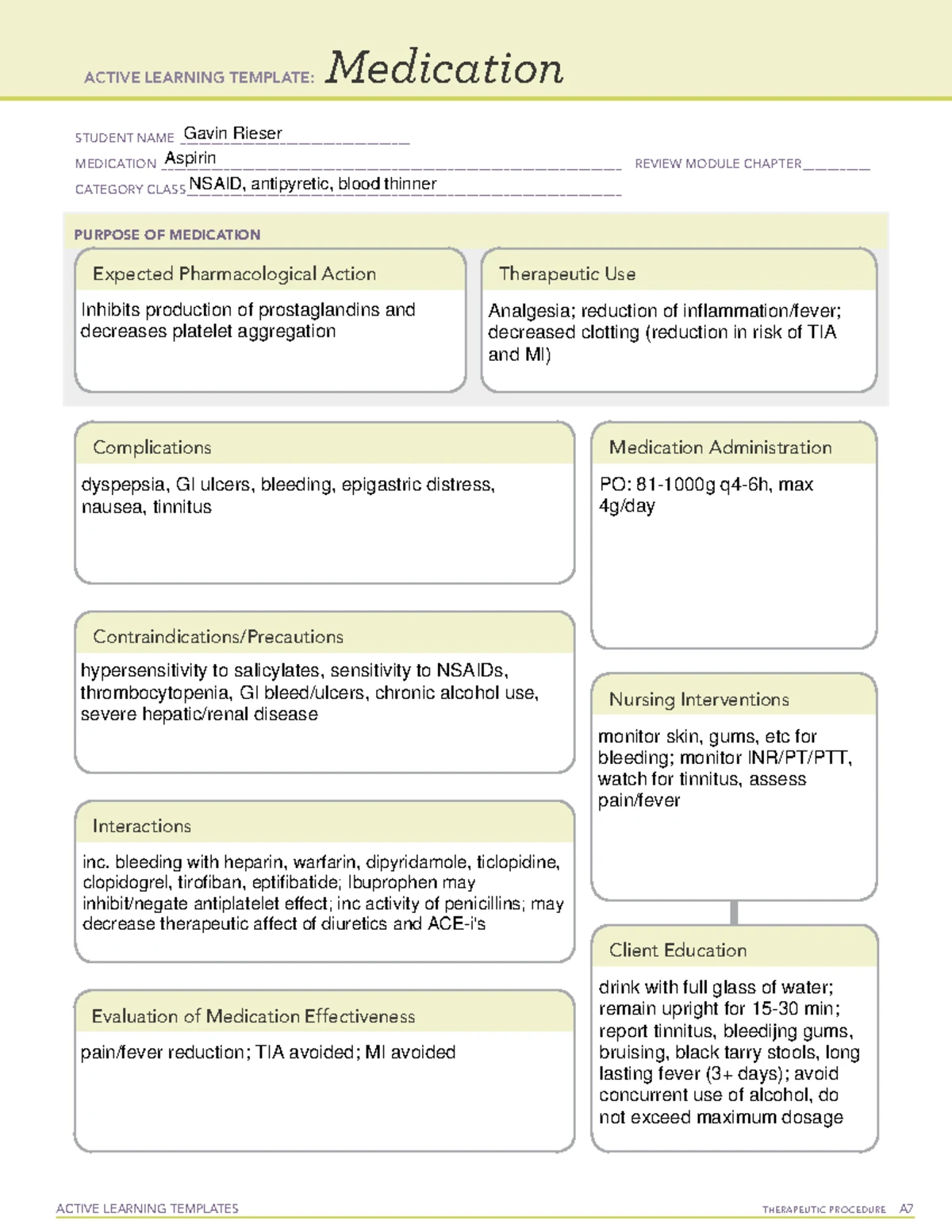
Active Learning Template Nursing Skill form (IV discontinuation
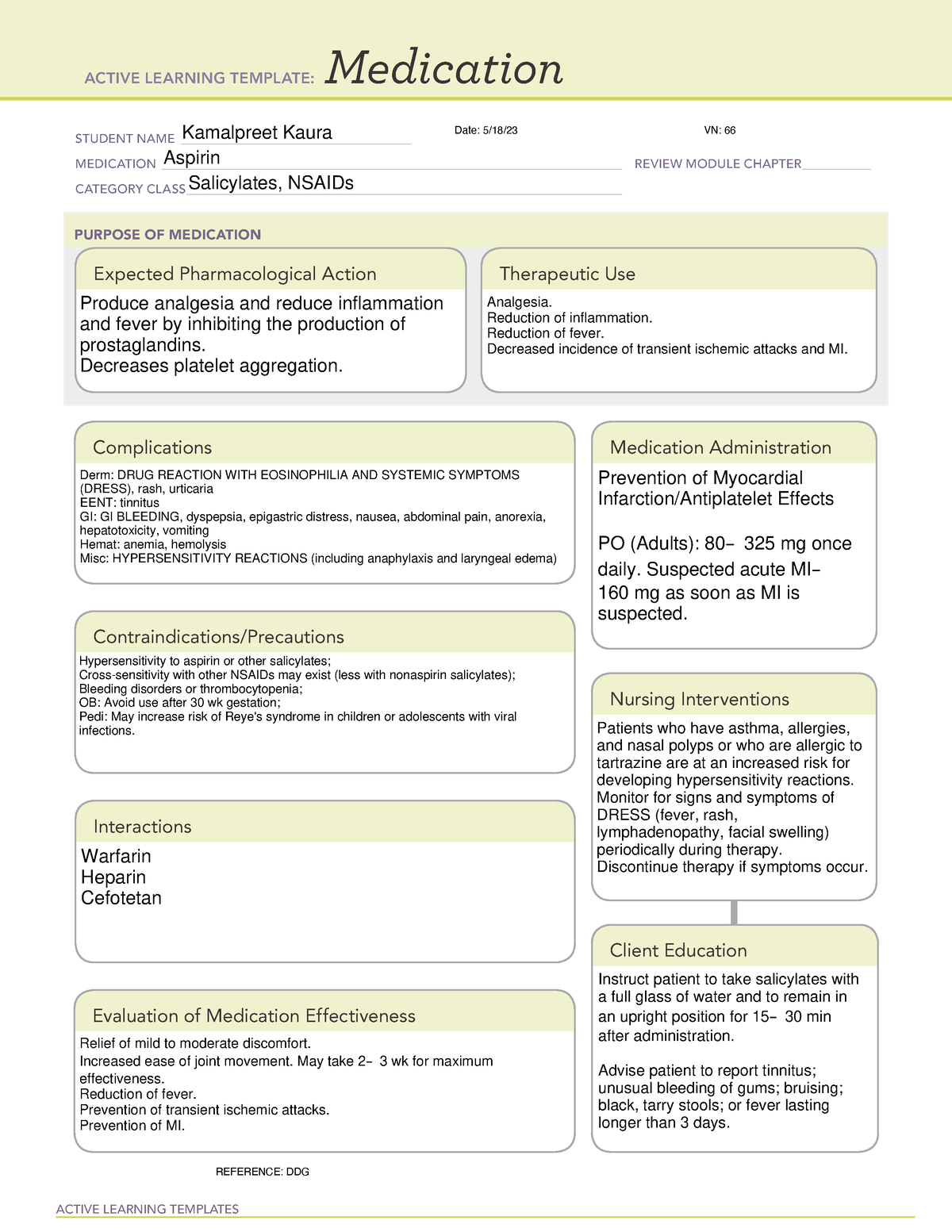
Aspirin ATI Template. ACTIVE LEARNING TEMPLATES Medication STUDENT
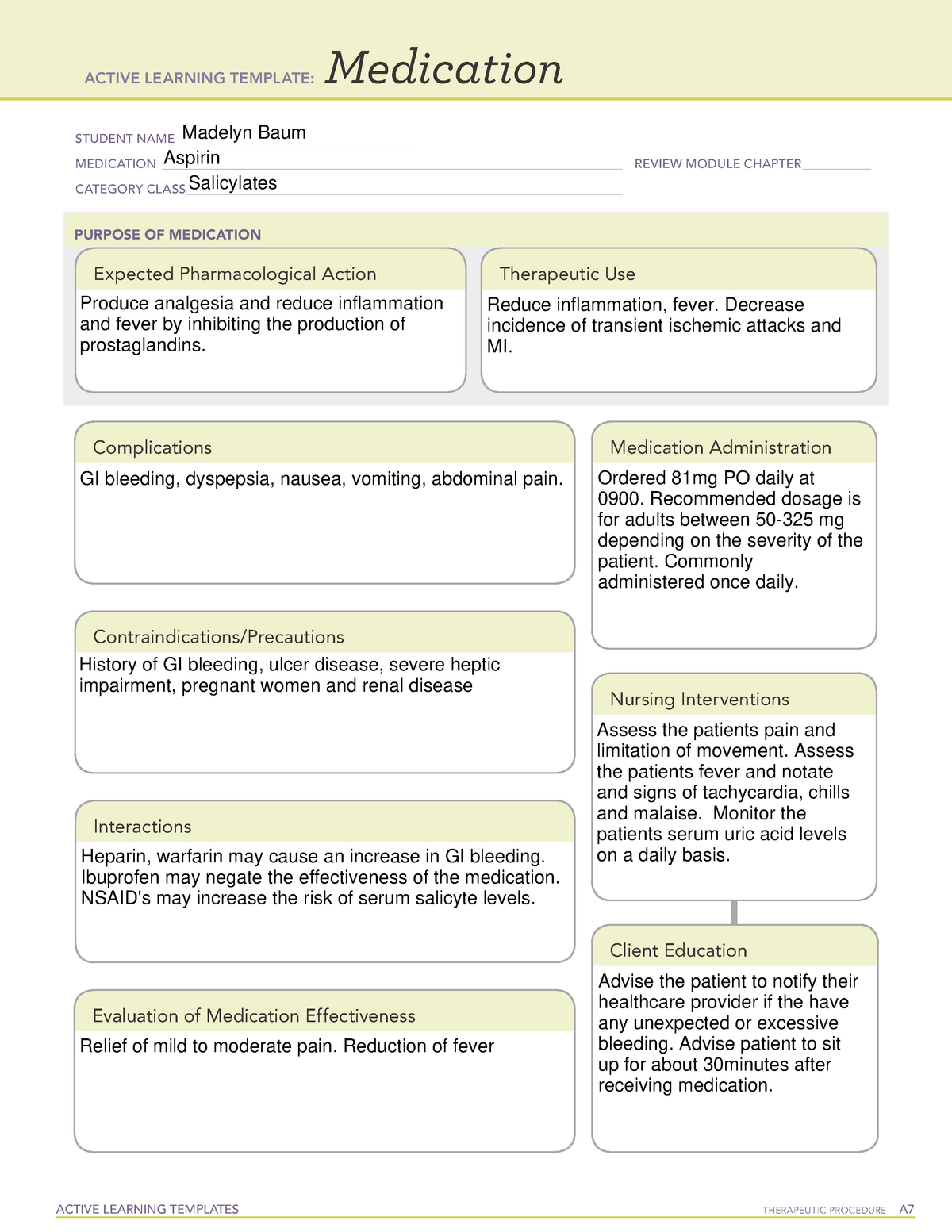
Aspirin Med sheet Medication Template ACTIVE LEARNING TEMPLATES

Aspirin Medication Template Uses, Side Effects, & Nursing Interventions
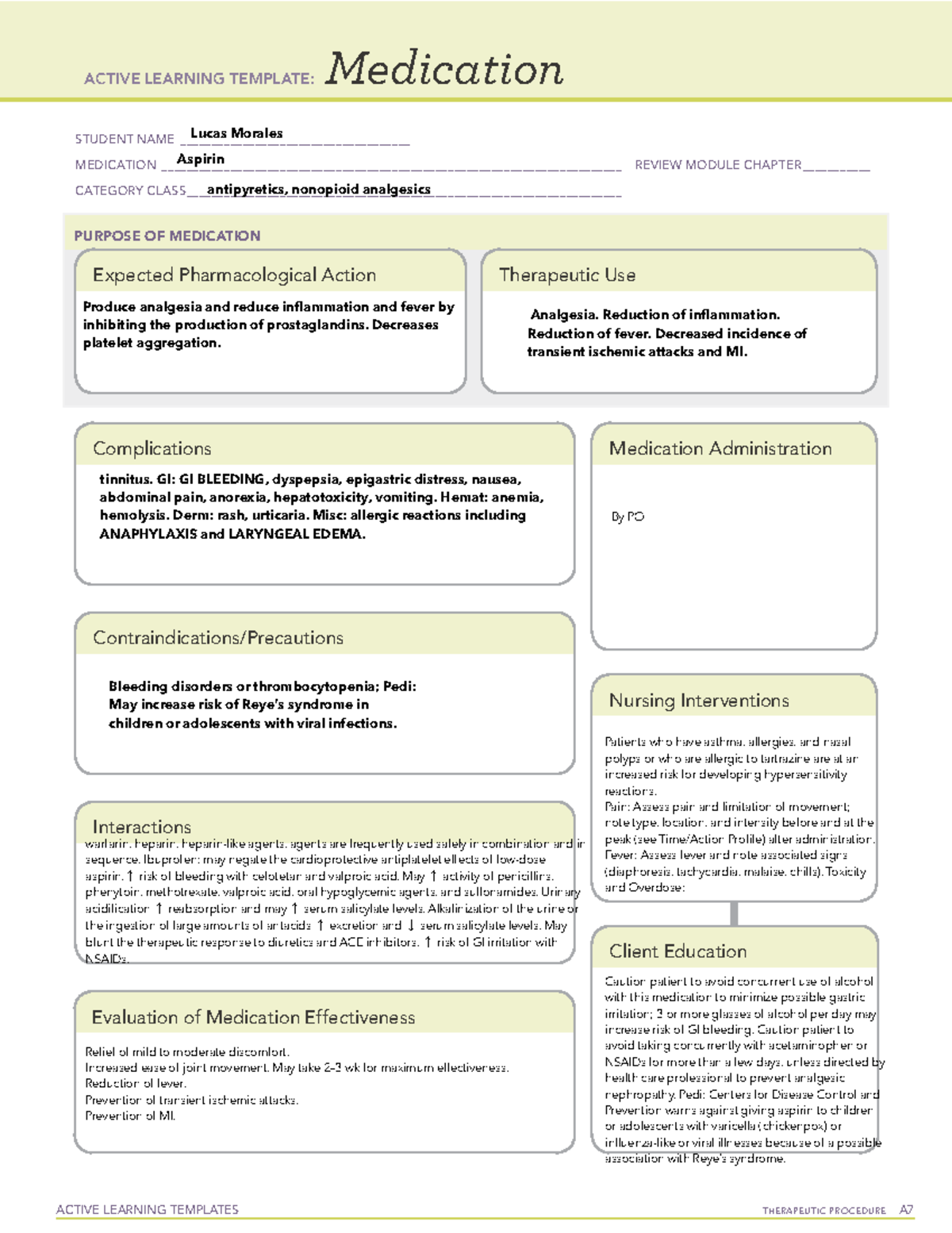
Aspirin Medication Overview ATI Active Learning Template Studocu
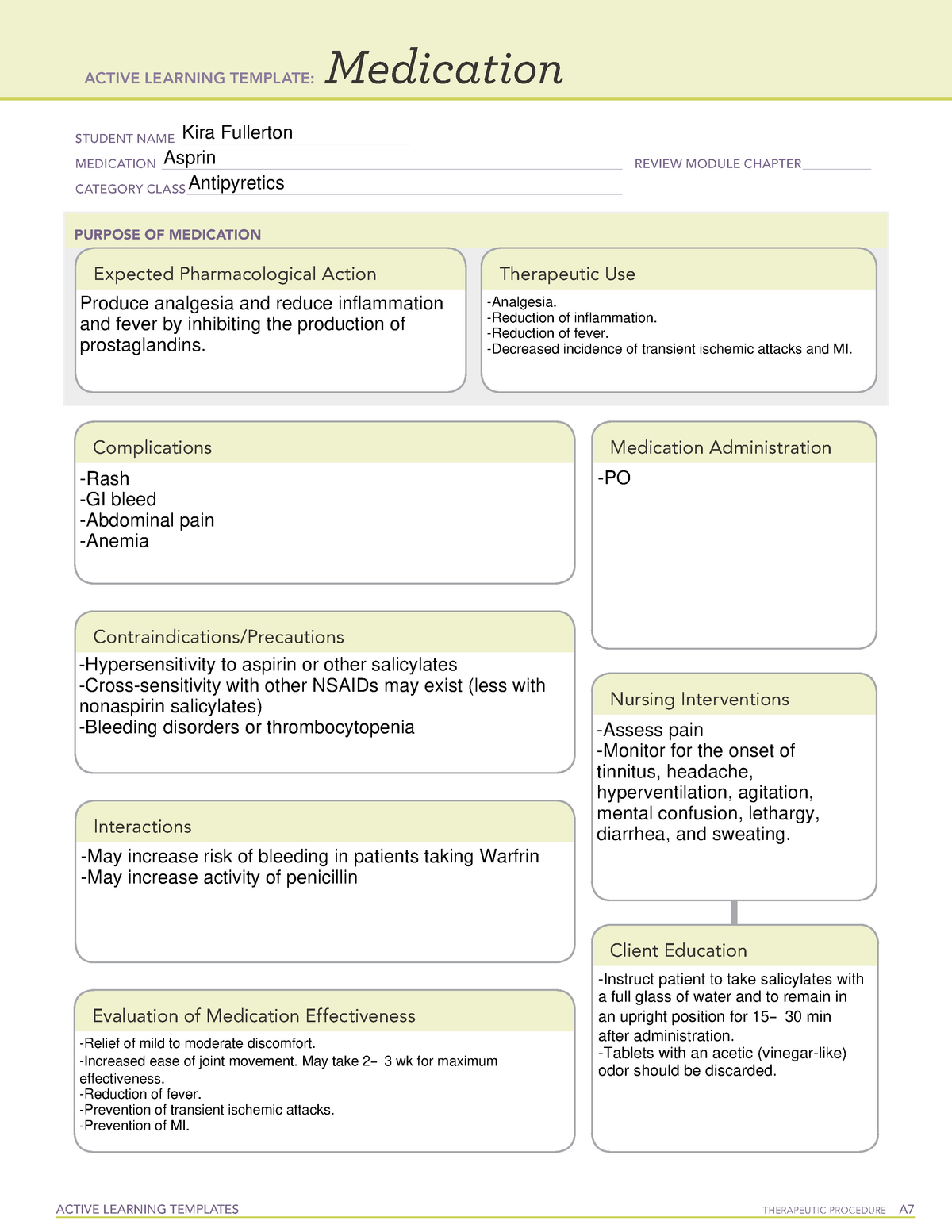
Ati Medication Template Aspirin, Web active learing template for the
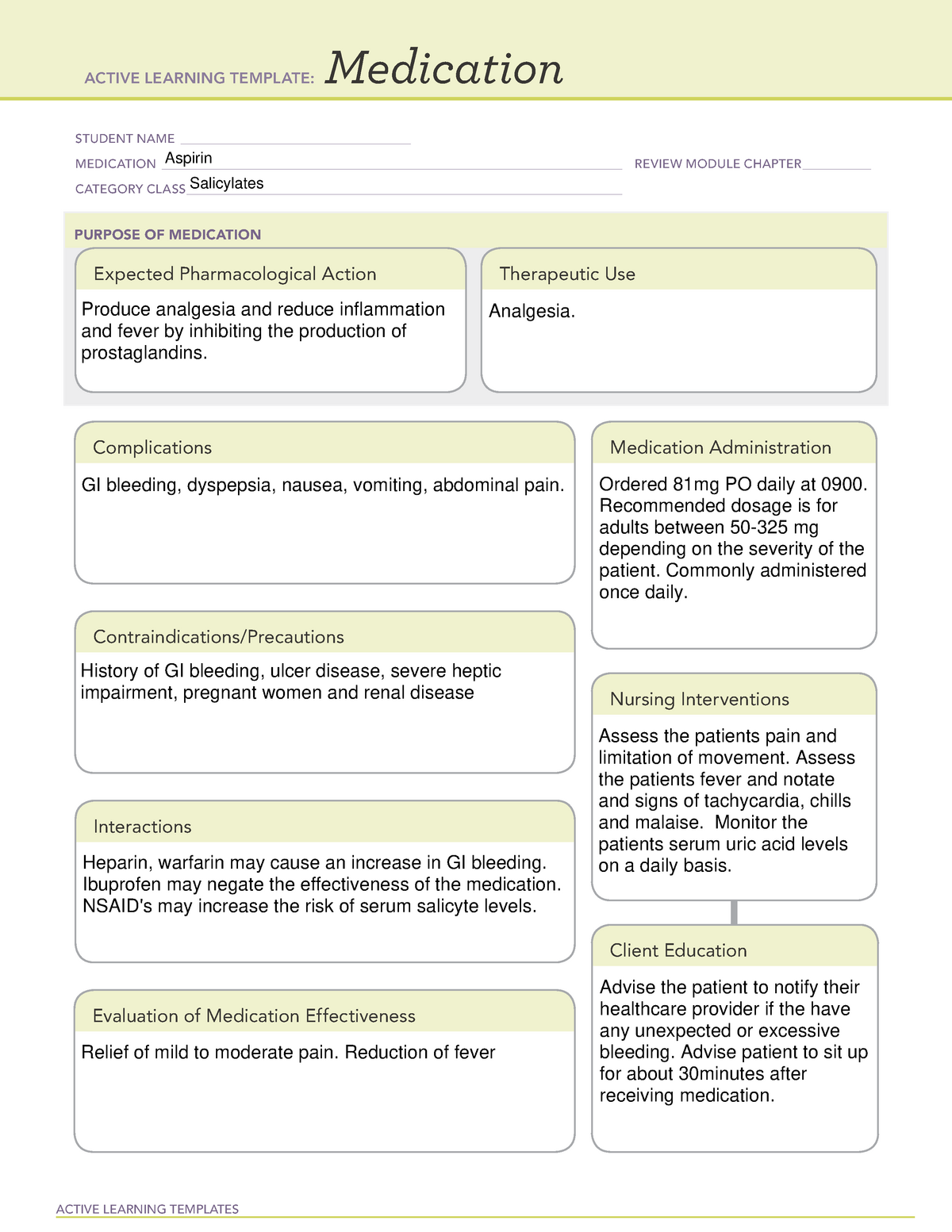
Aspirin medication ACTIVE LEARNING TEMPLATES Medication STUDENT NAME
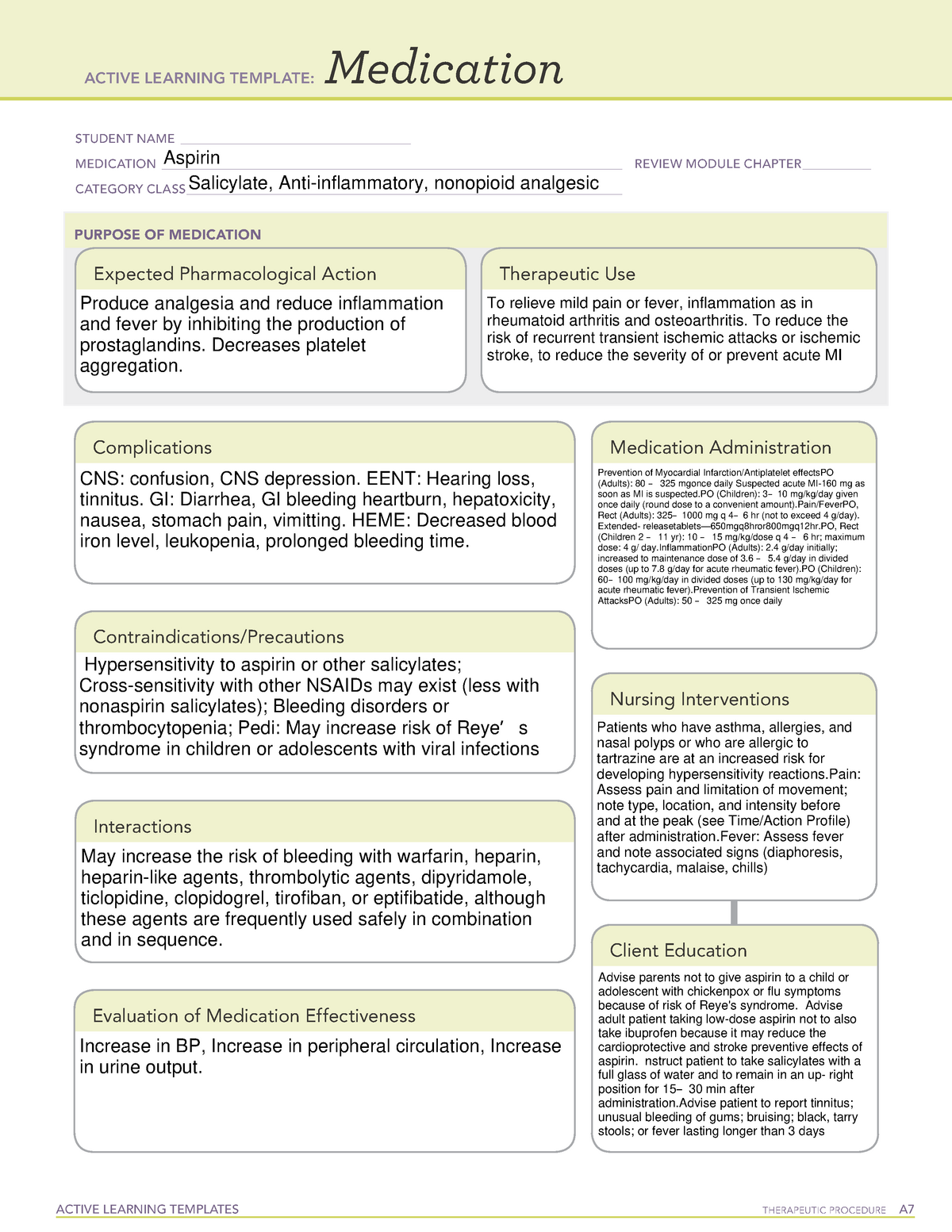
Aspirin ATI medication template fdfdf ACTIVE LEARNING TEMPLATES
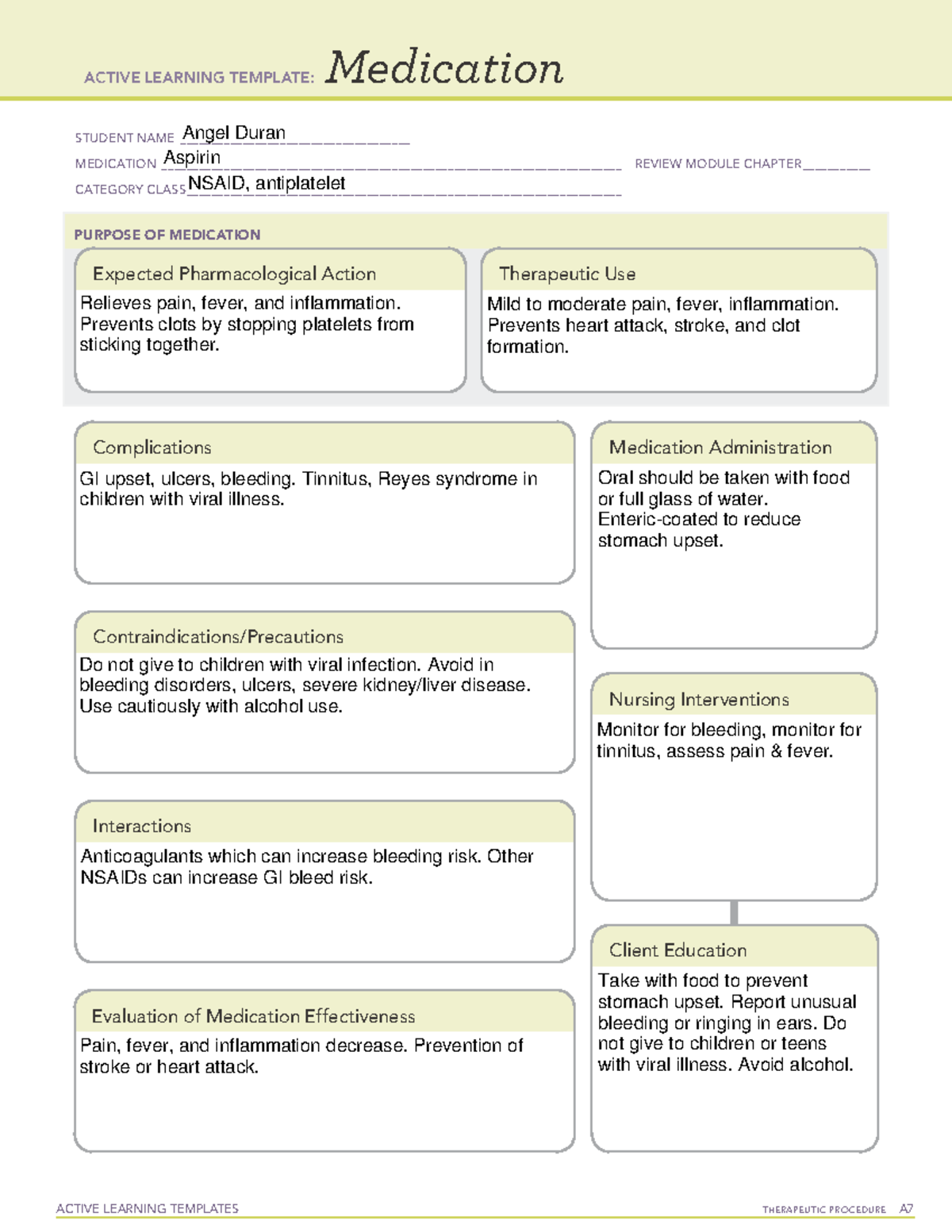
Aspirin Medication Review Notes Active Learning Template Studocu
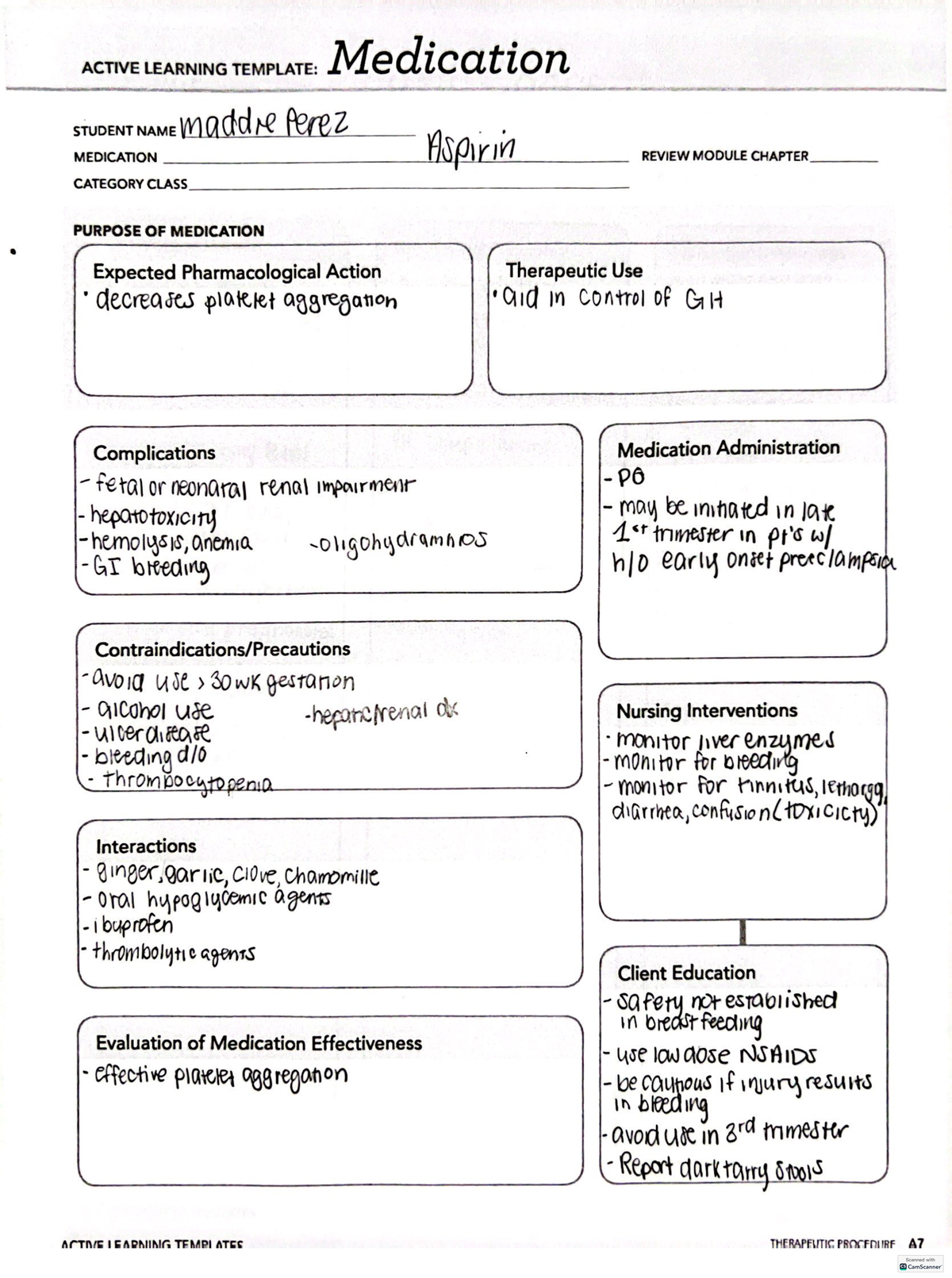
Aspirin ati medication template ACTIVE LEARNING TEMPLATE Medication
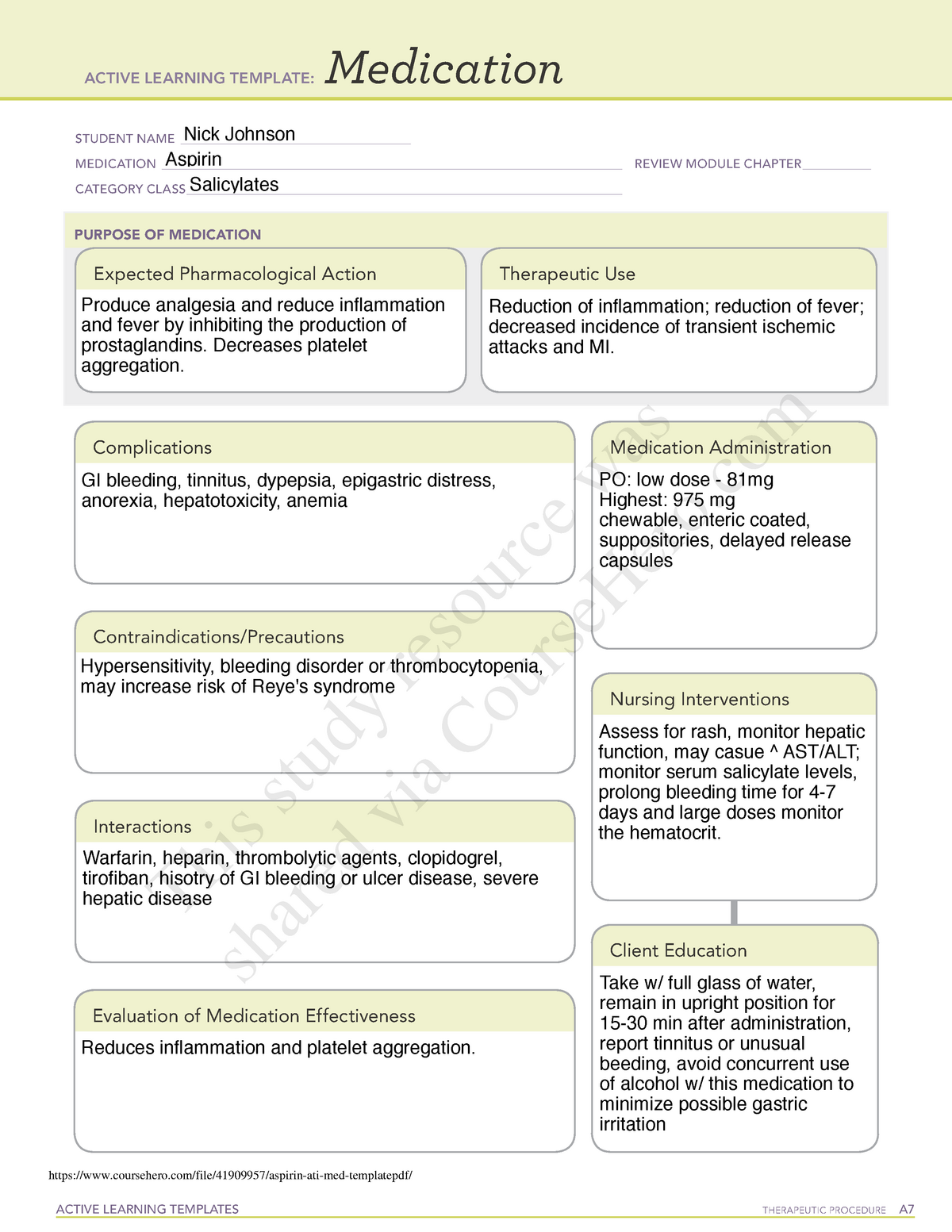
Aspirin Medication Template
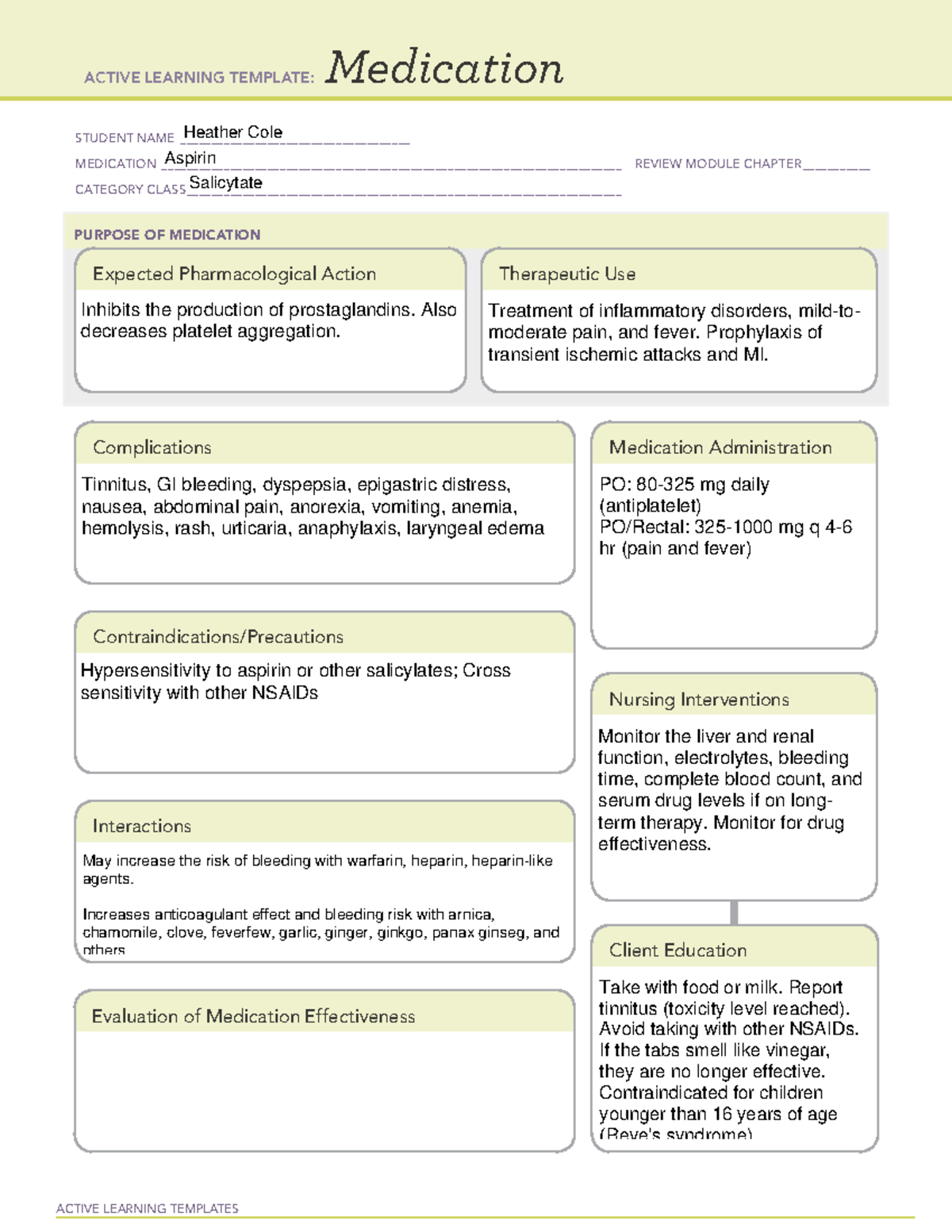
Aspirin Drug Card Active Learning Template for Nursing (MED 101
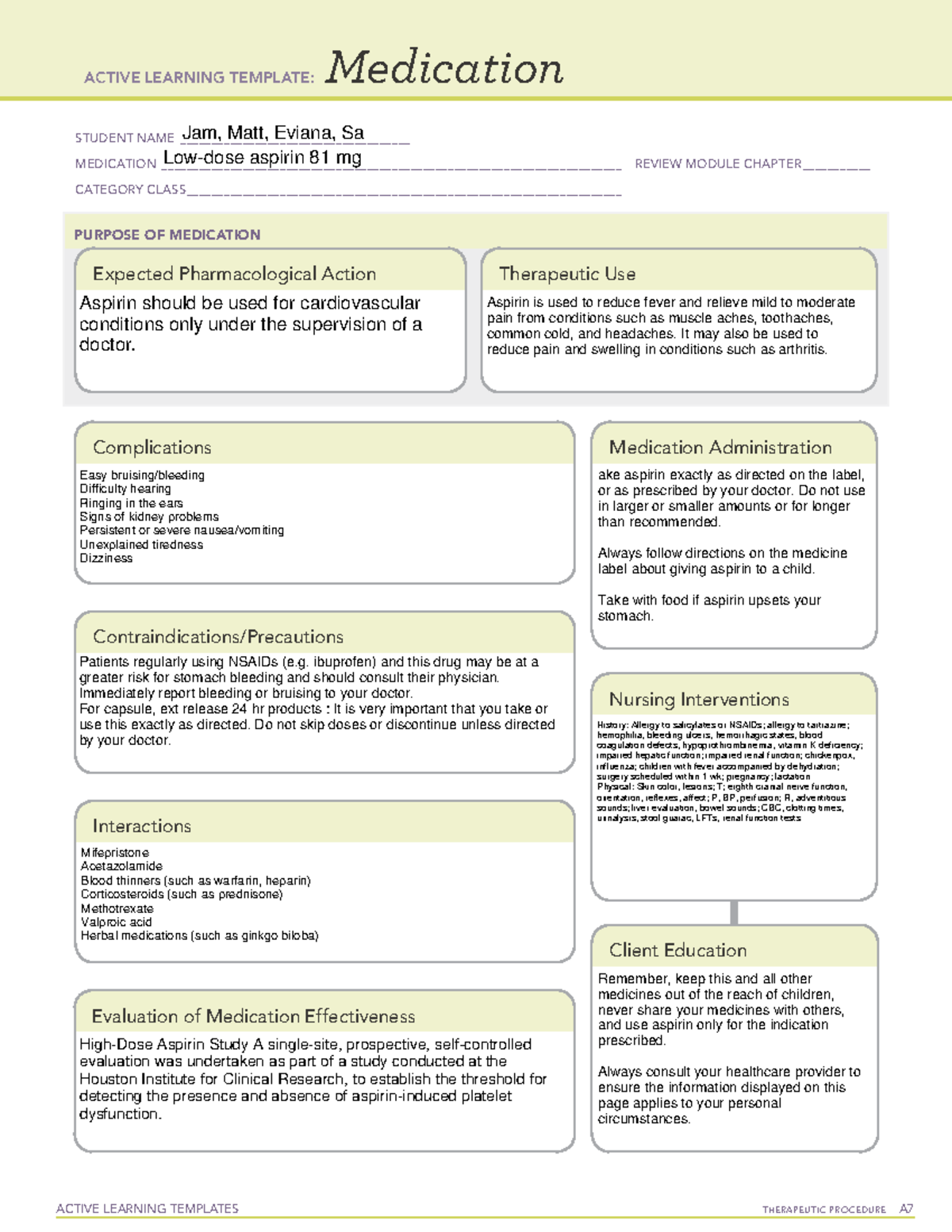
Lowdose aspirin 81 mg Active Learning Template medication ACTIVE
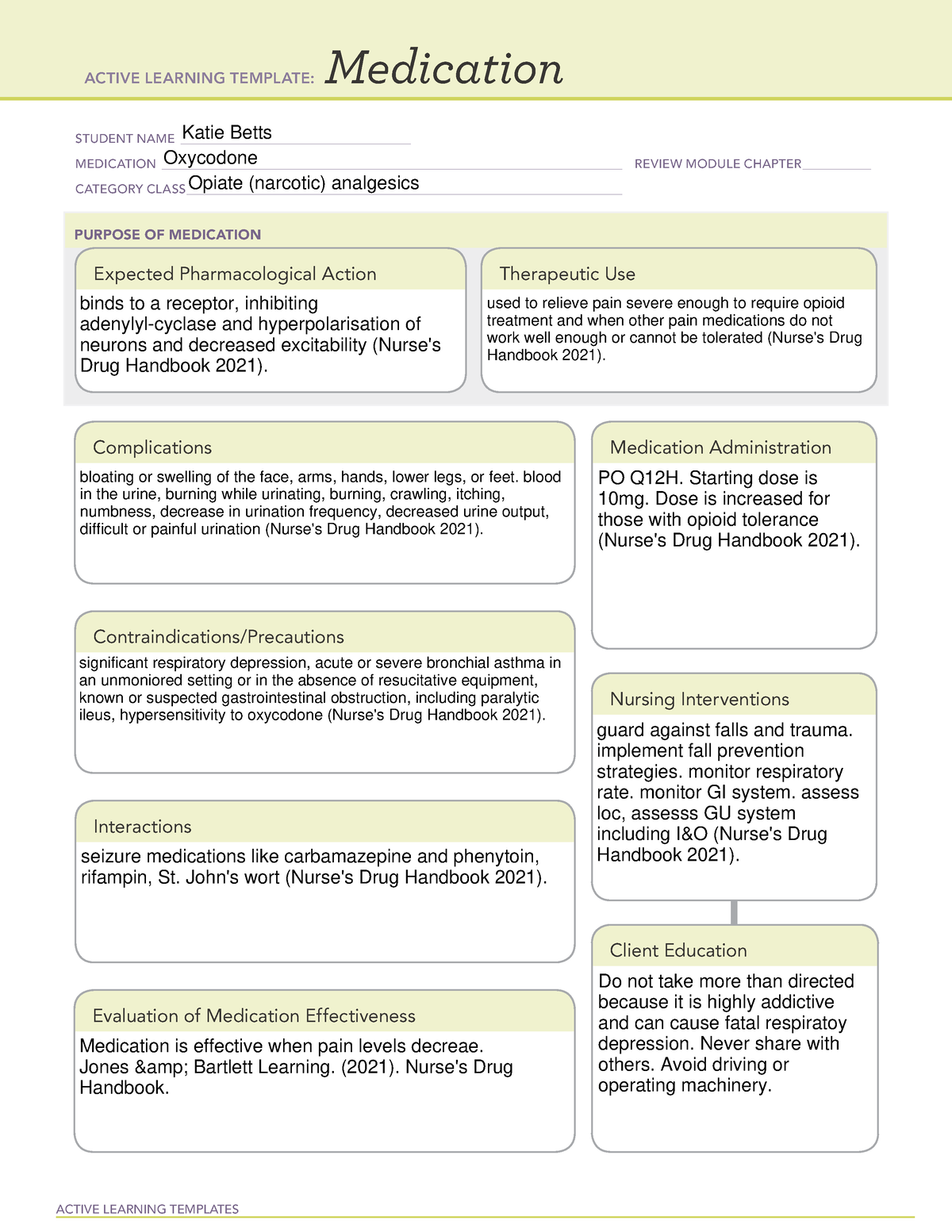
Oxycodone Medication Template ACTIVE LEARNING TEMPLATES Medication
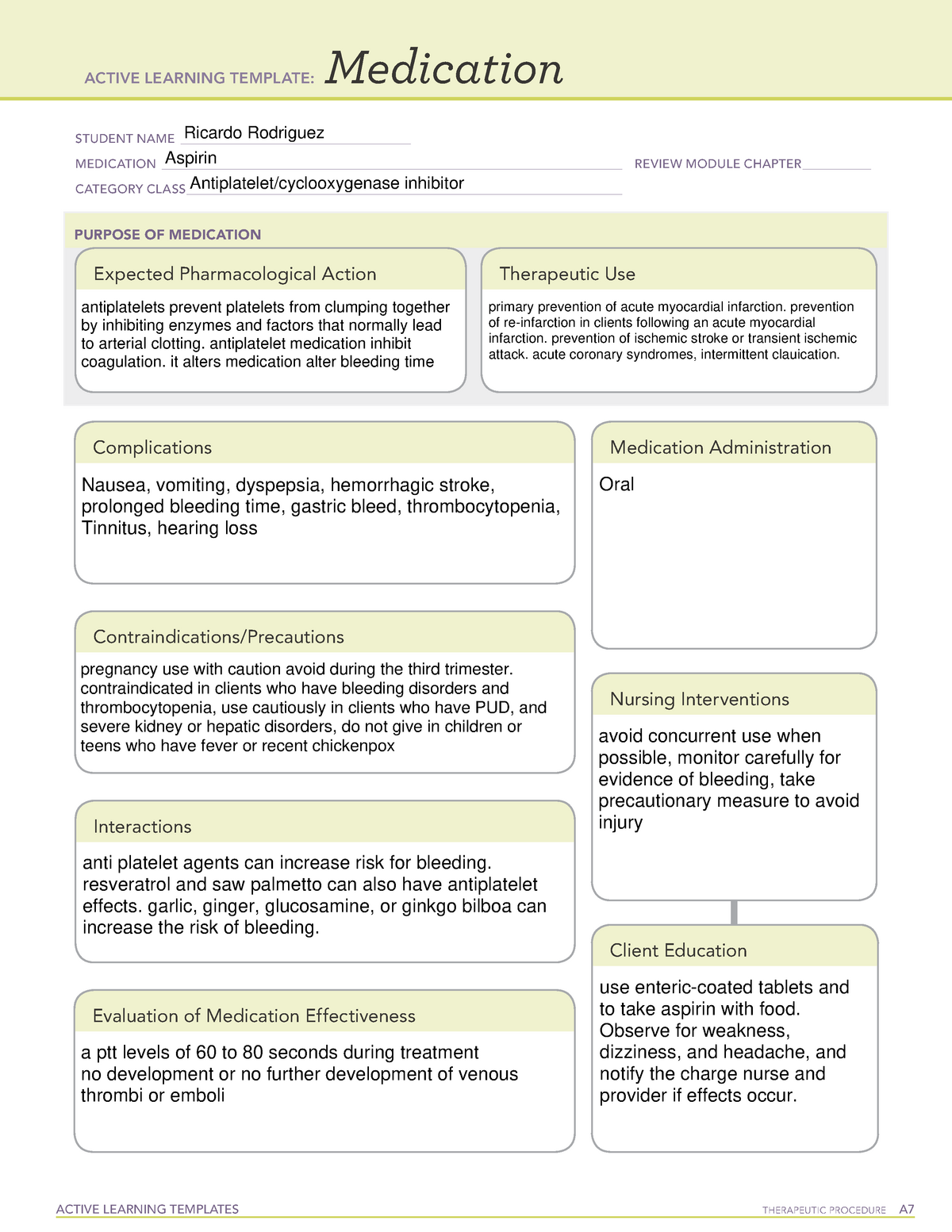
Aspirin ACTIVE LEARNING TEMPLATES THERAPEUTIC PROCEDURE A Medication
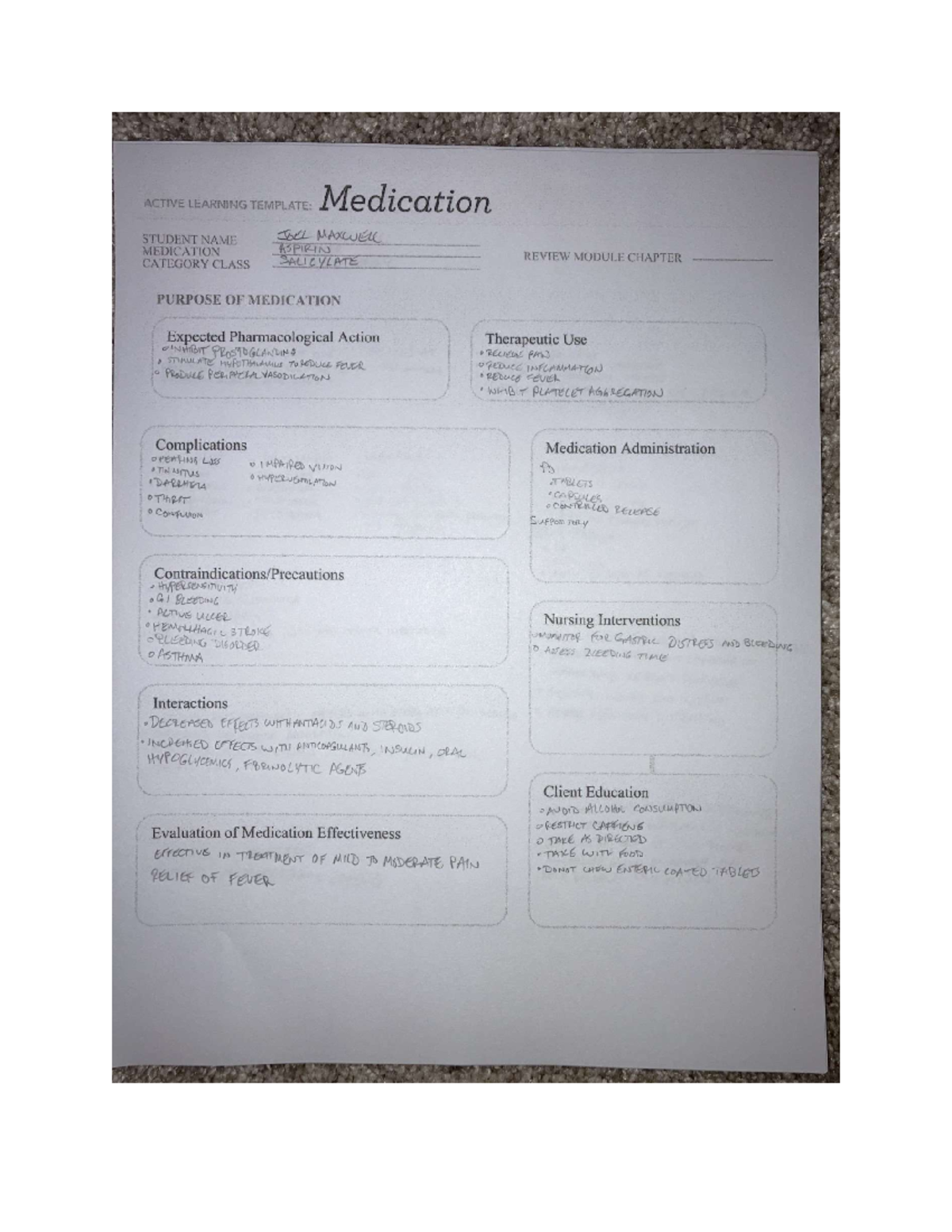
Aspirin ATI Active Learning Template ACTIVE LEARNING TEMPLATE
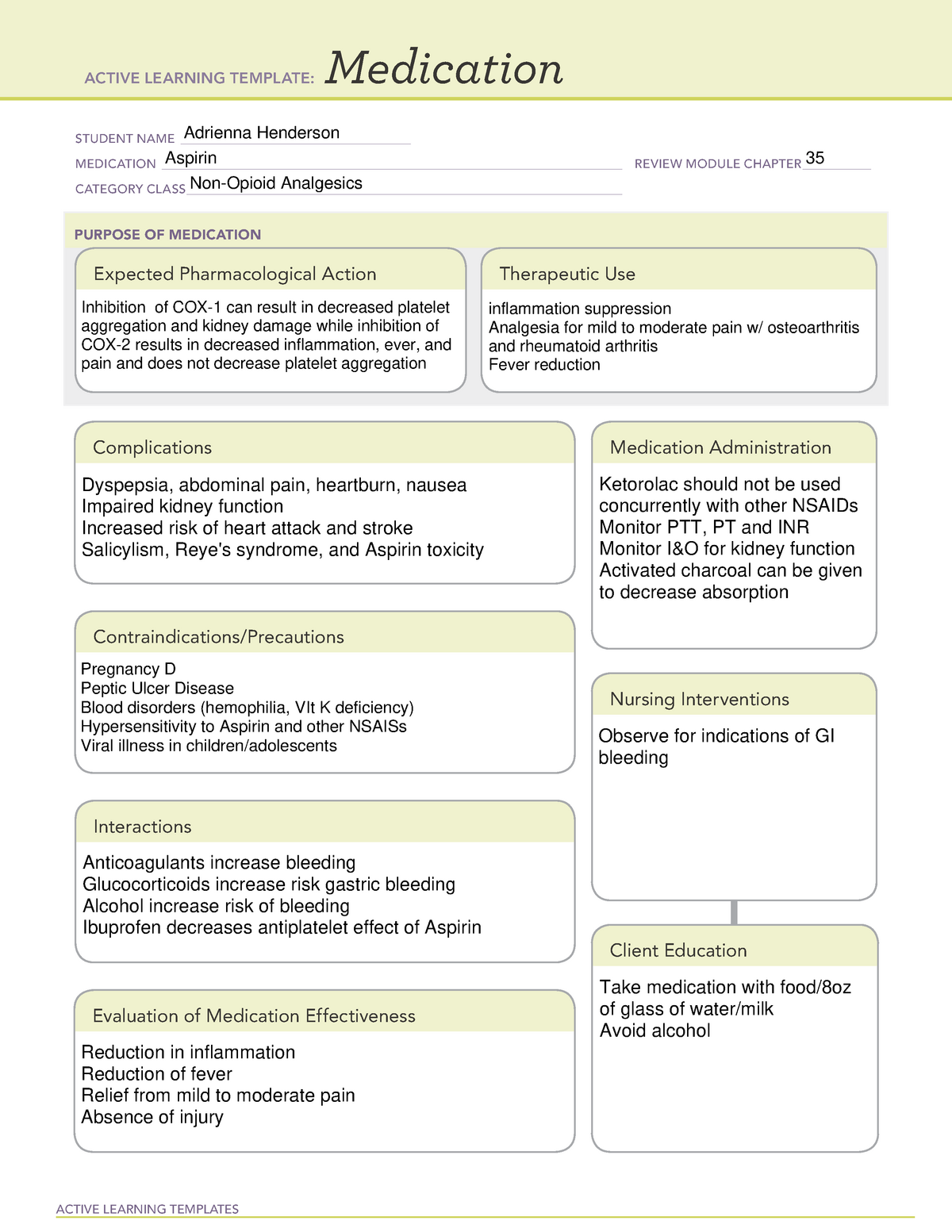
Aspirin Medication Template ACTIVE LEARNING TEMPLATES Medication
Aspirin Ati Medication Template
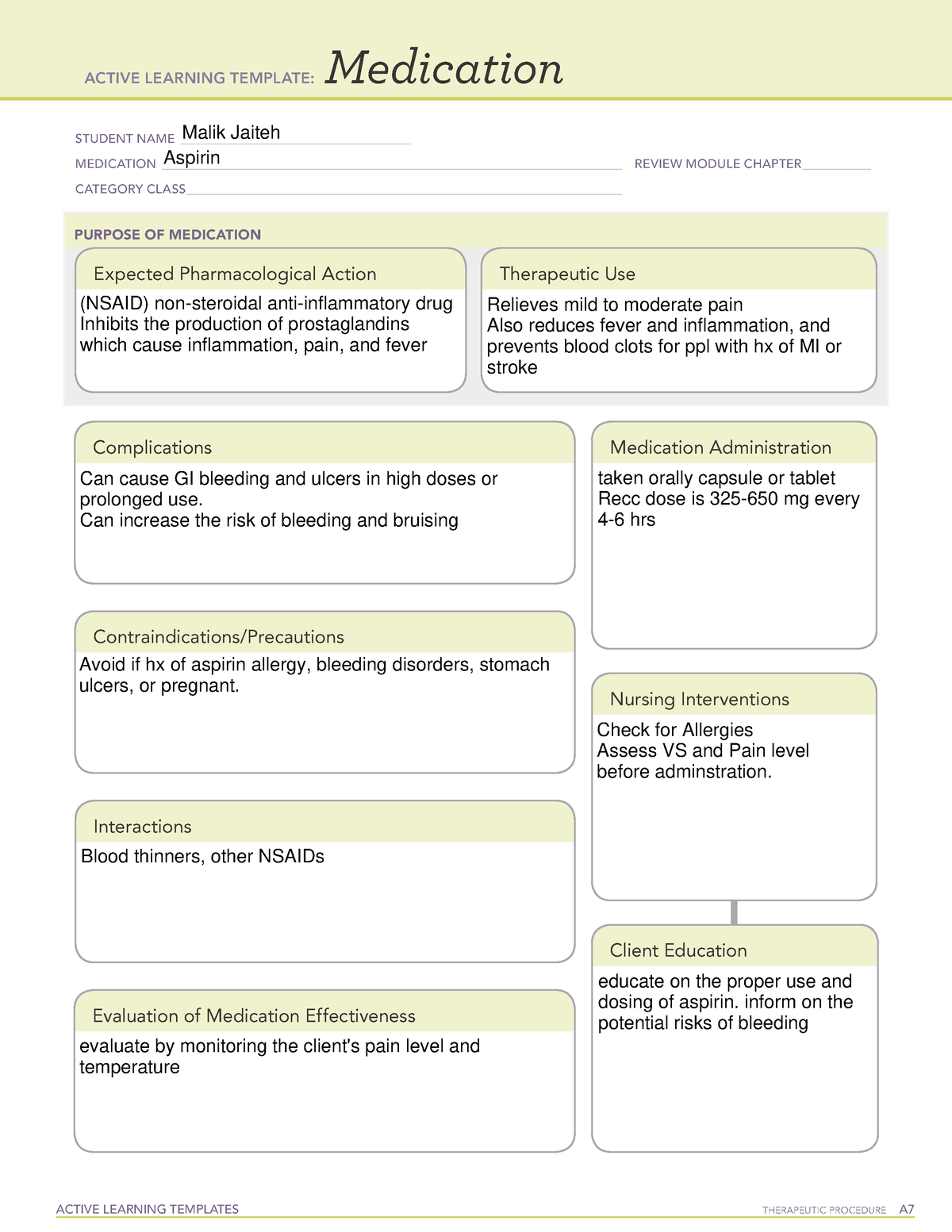
Aspirin ACTIVE LEARNING TEMPLATES TherapeuTic procedure A Medication
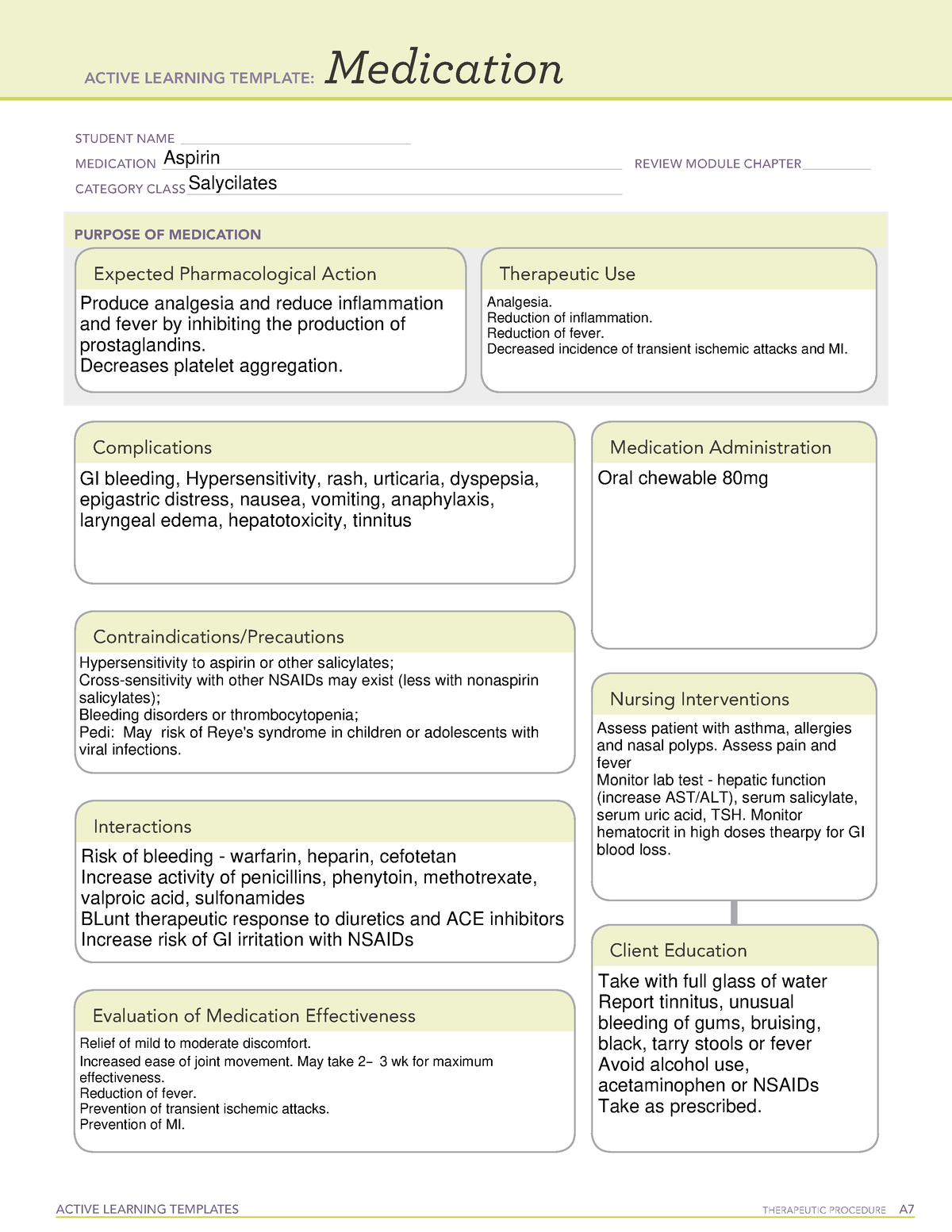
Aspirin medication template ACTIVE LEARNING TEMPLATES THERAPEUTIC
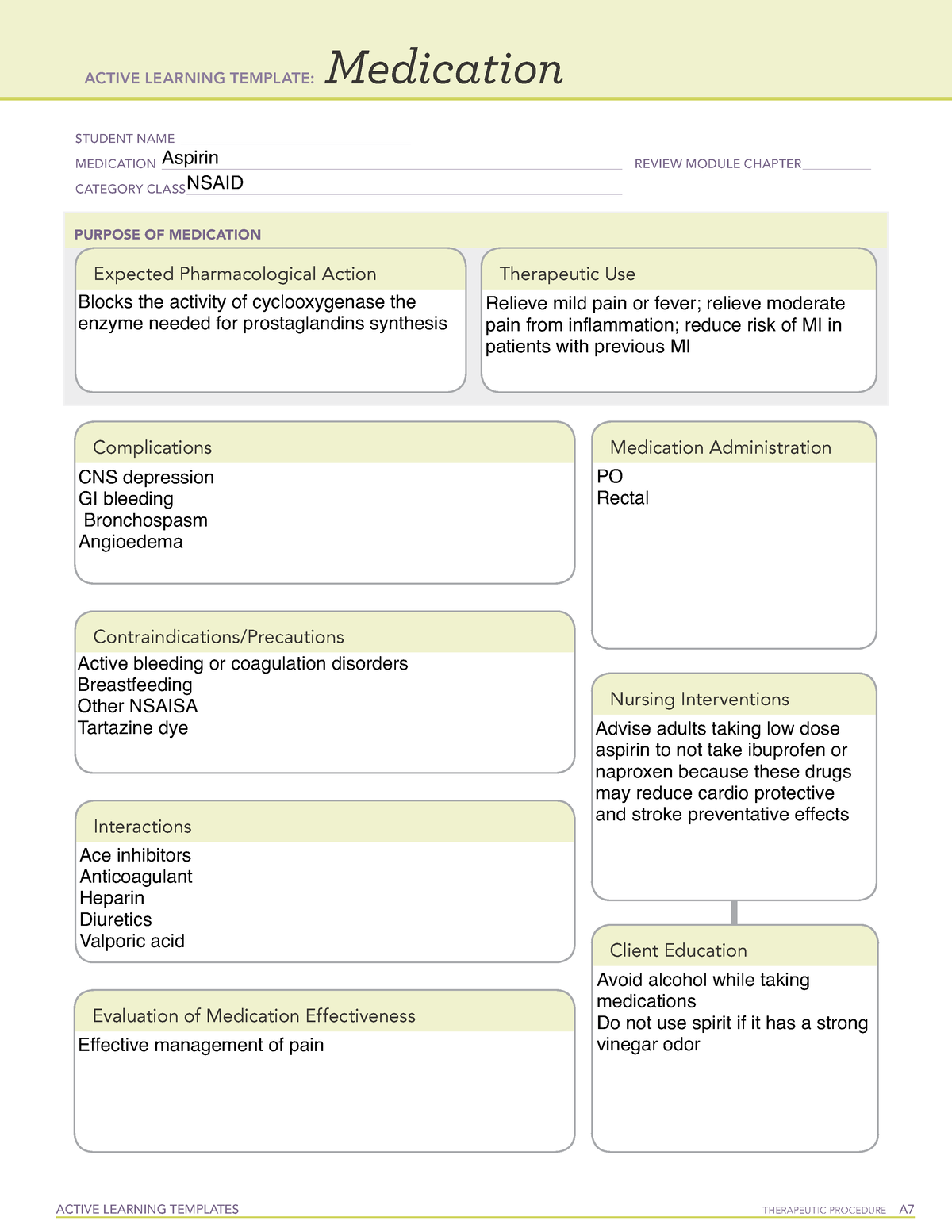
Aspirin Active Learning Template TGIDQQ
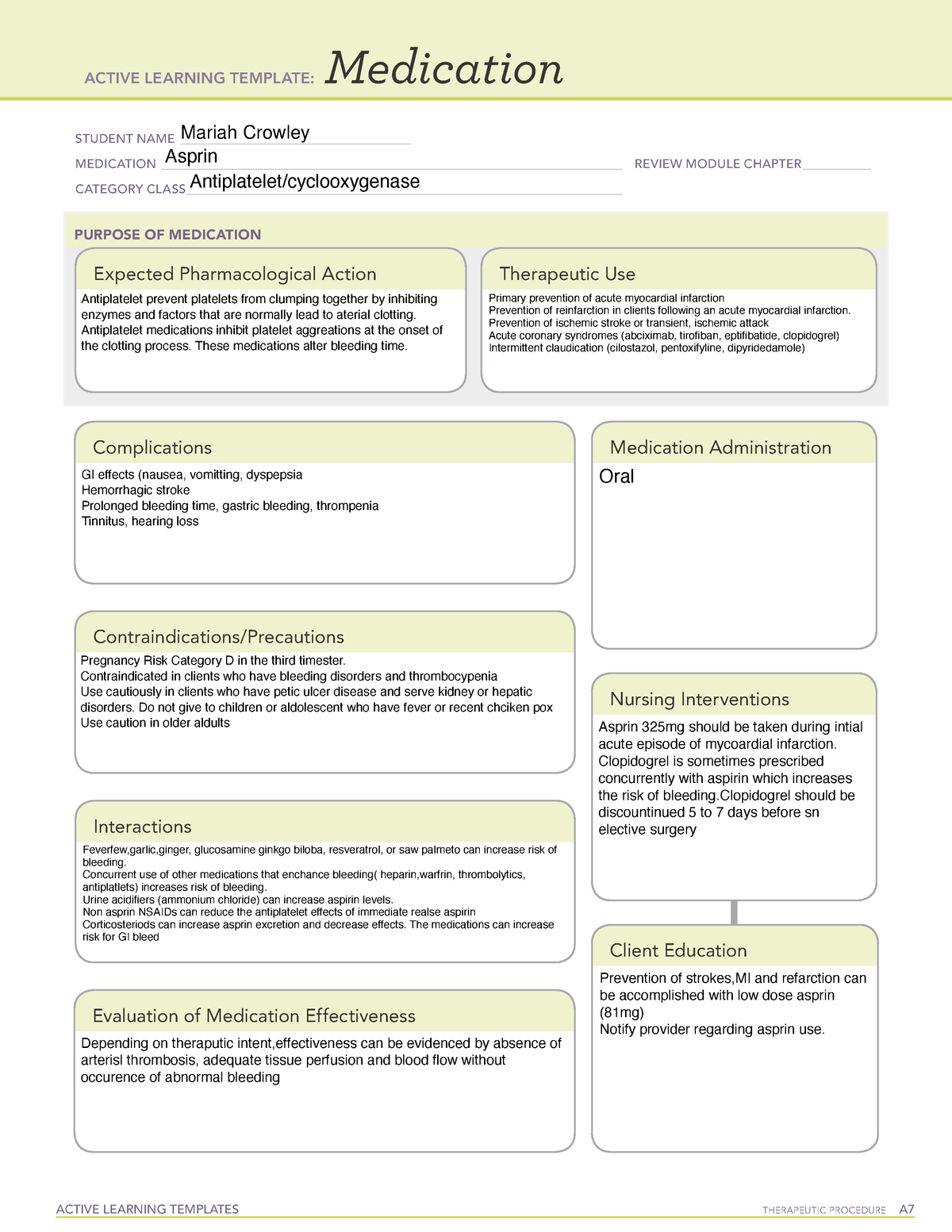
Ati Medication Template Aspirin
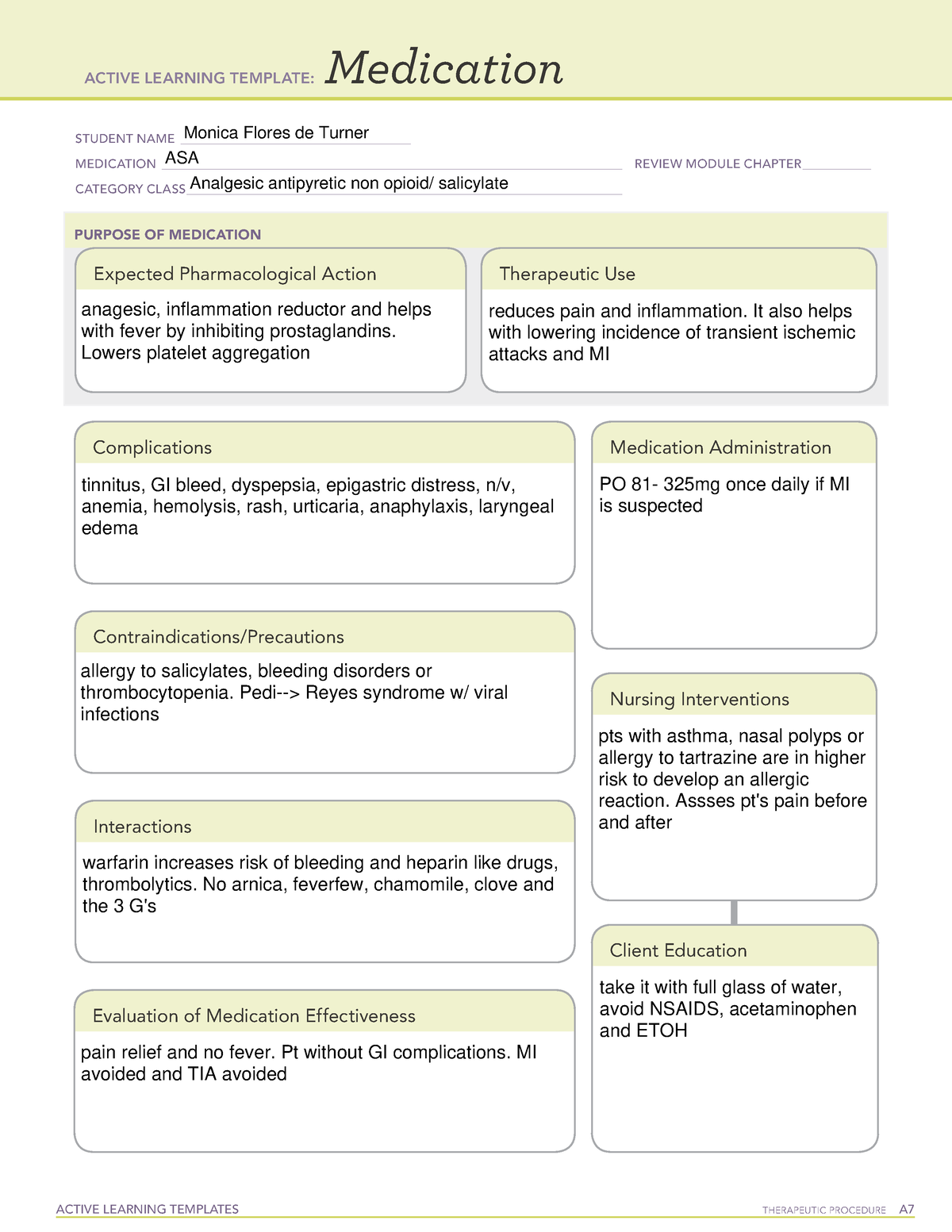
Aspirin medication template for ATI ACTIVE LEARNING TEMPLATES
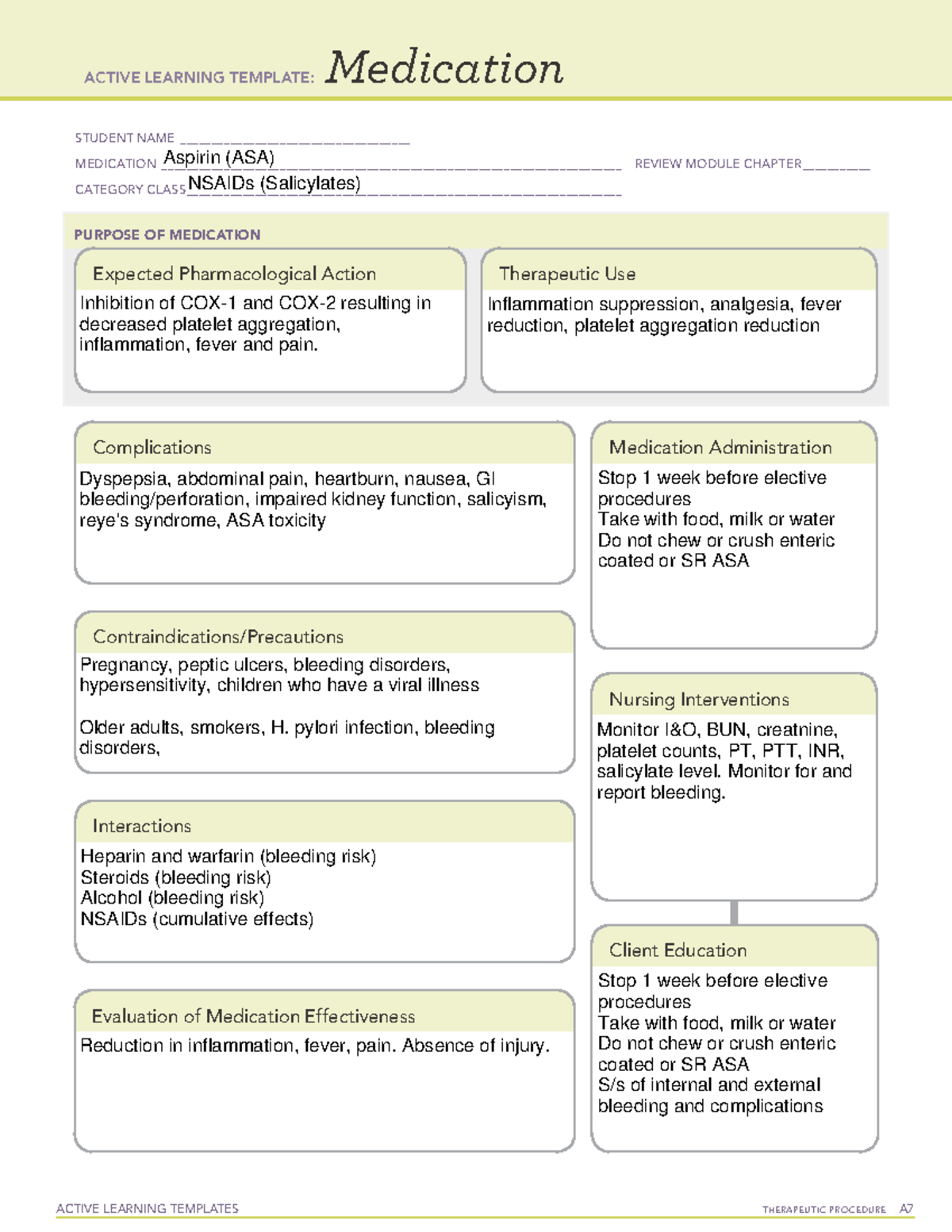
Aspirin Medication ALT ACTIVE LEARNING TEMPLATES THERAPEUTIC
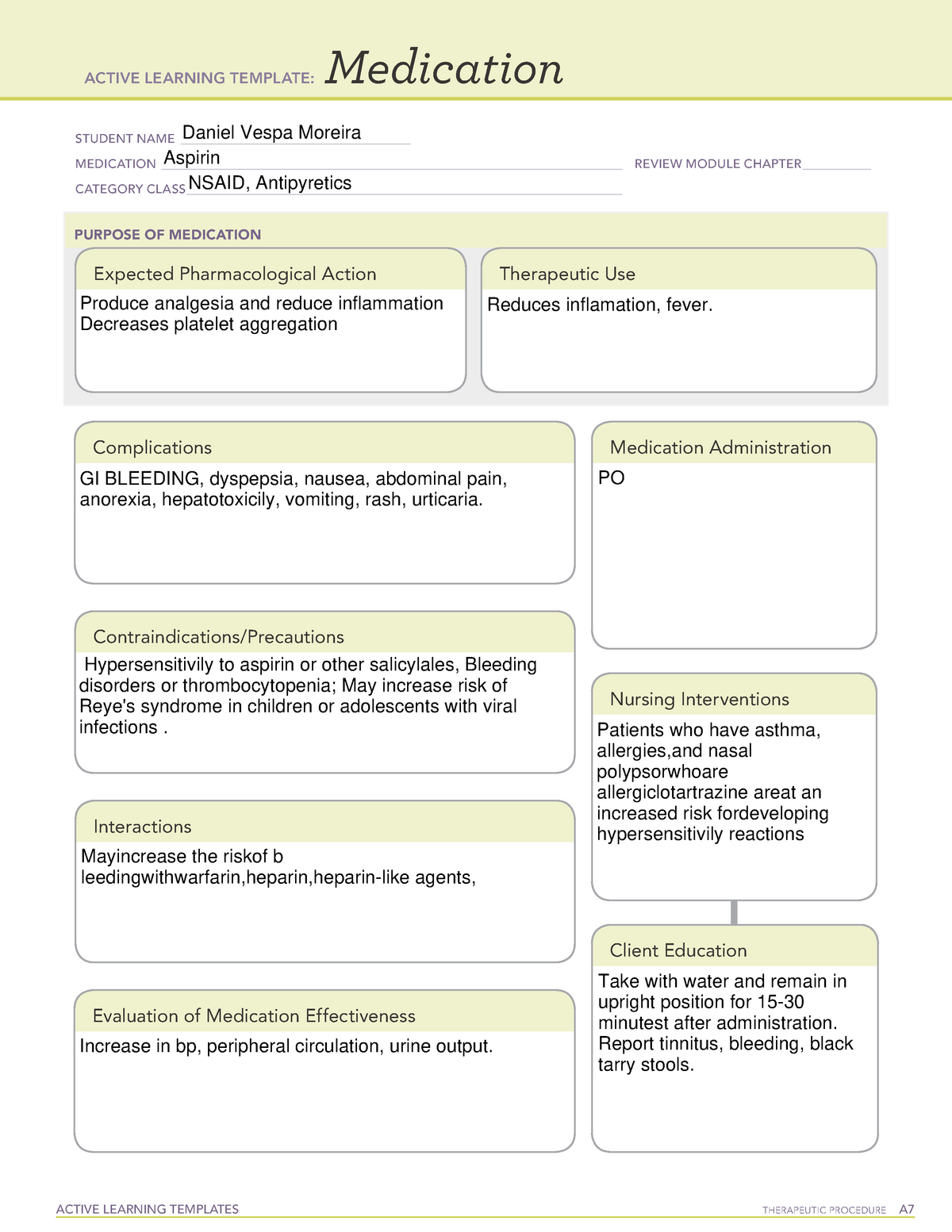
Aspirin Active Learning Template ACTIVE LEARNING TEMPLATES
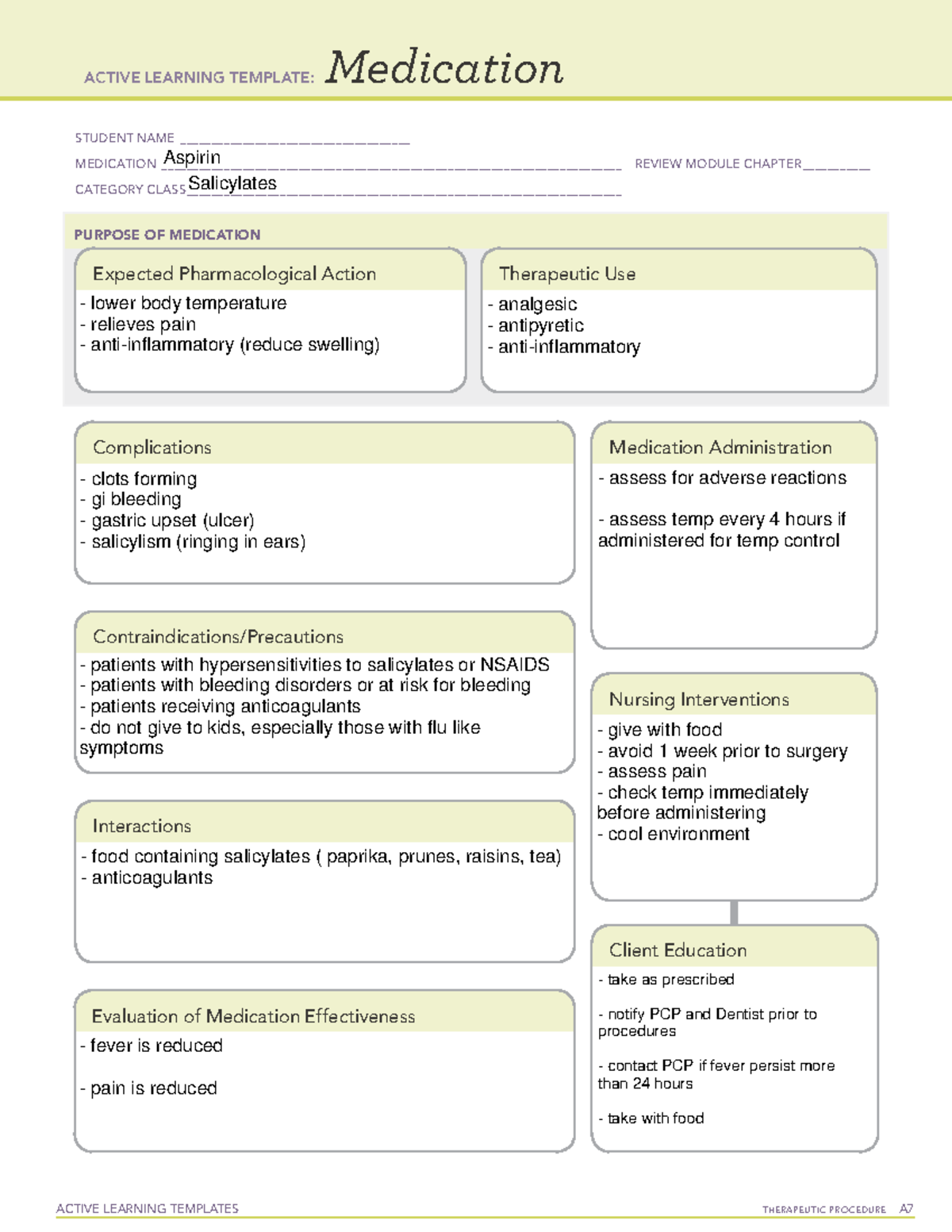
Salicylates Aspirin medication template ACTIVE LEARNING TEMPLATES
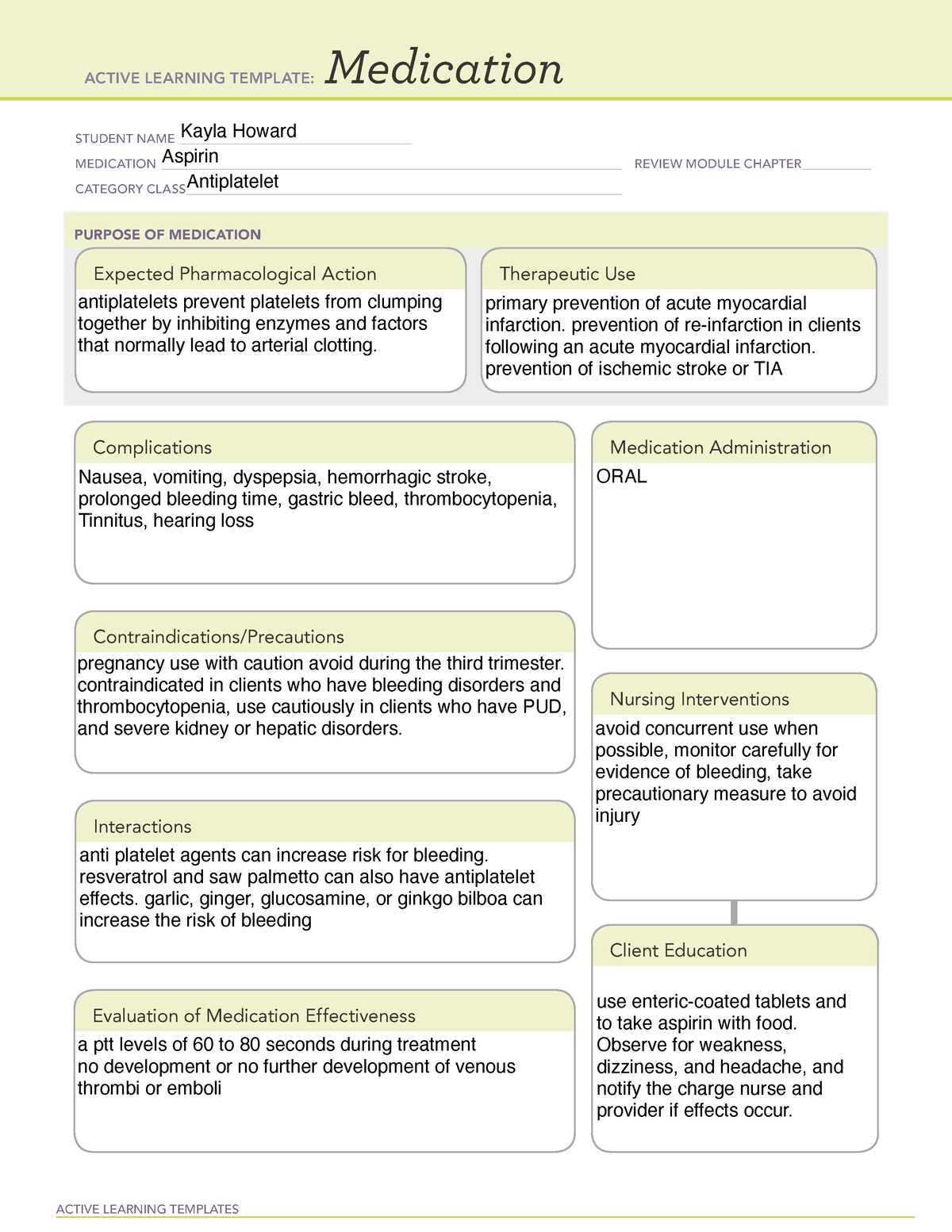
Aspirin medication template ACTIVE LEARNING TEMPLATES Medication
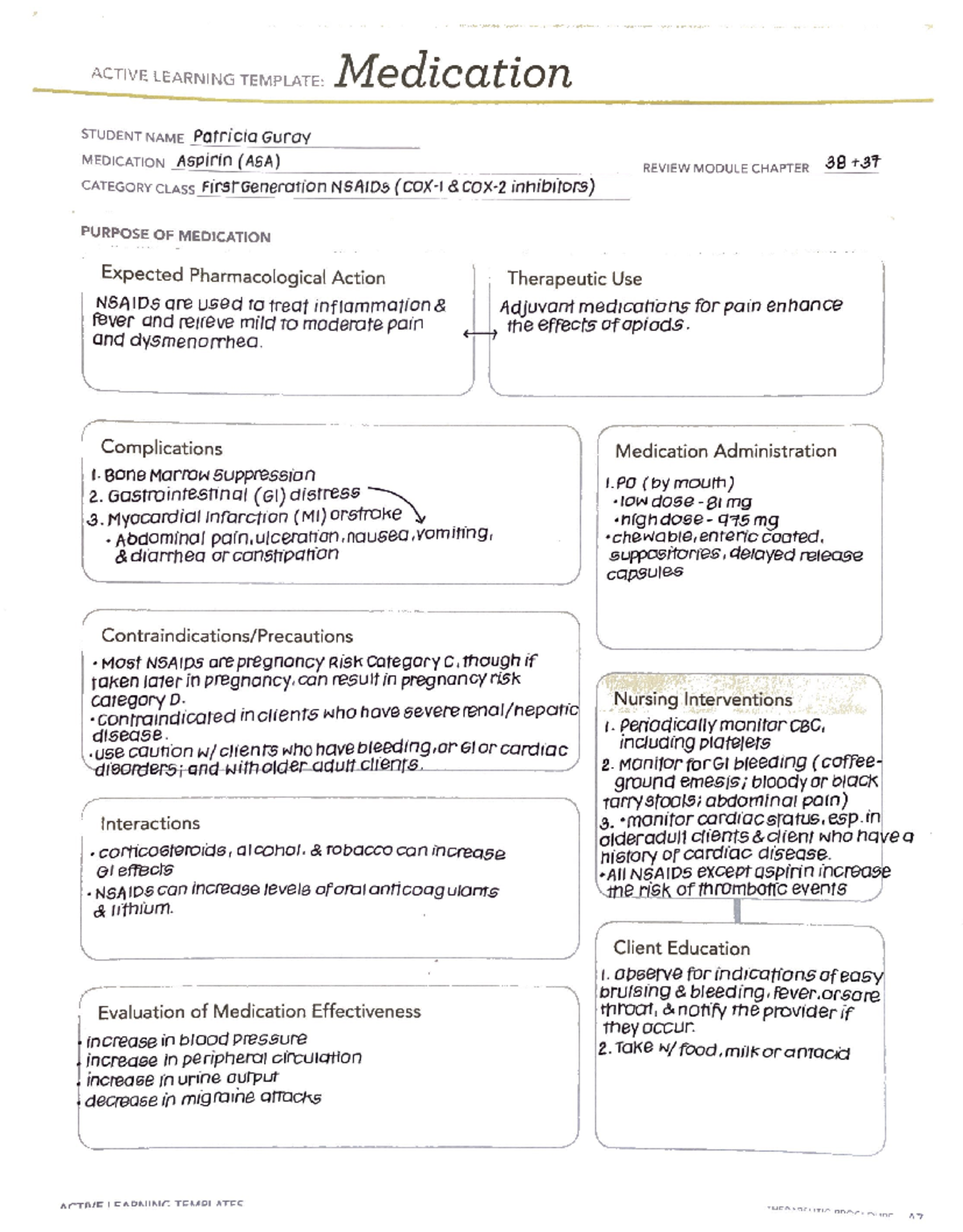
Aspirin Active Learning Template Medication Dr. Buchanan NURS 100
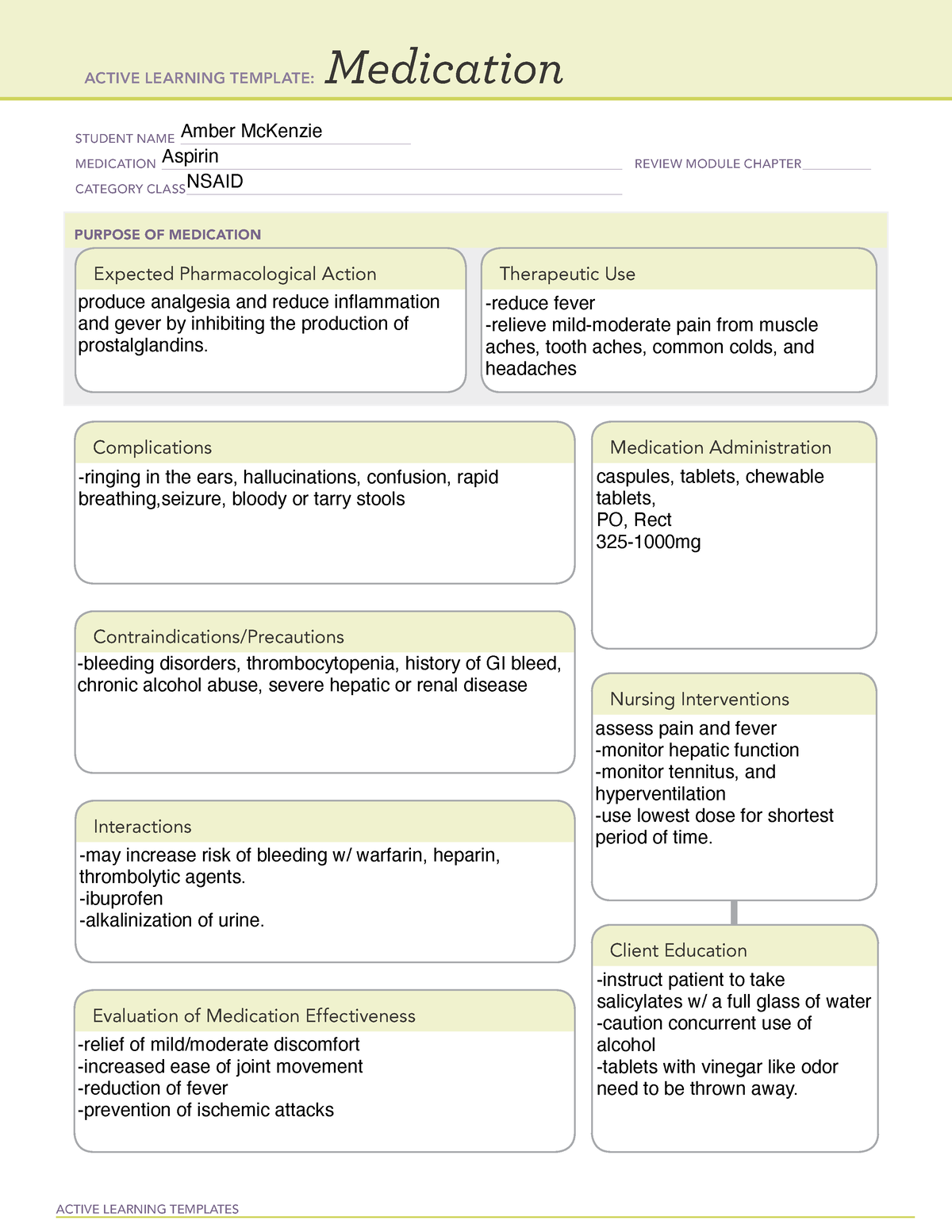
Aspirin Medication Template ACTIVE LEARNING TEMPLATES Medication
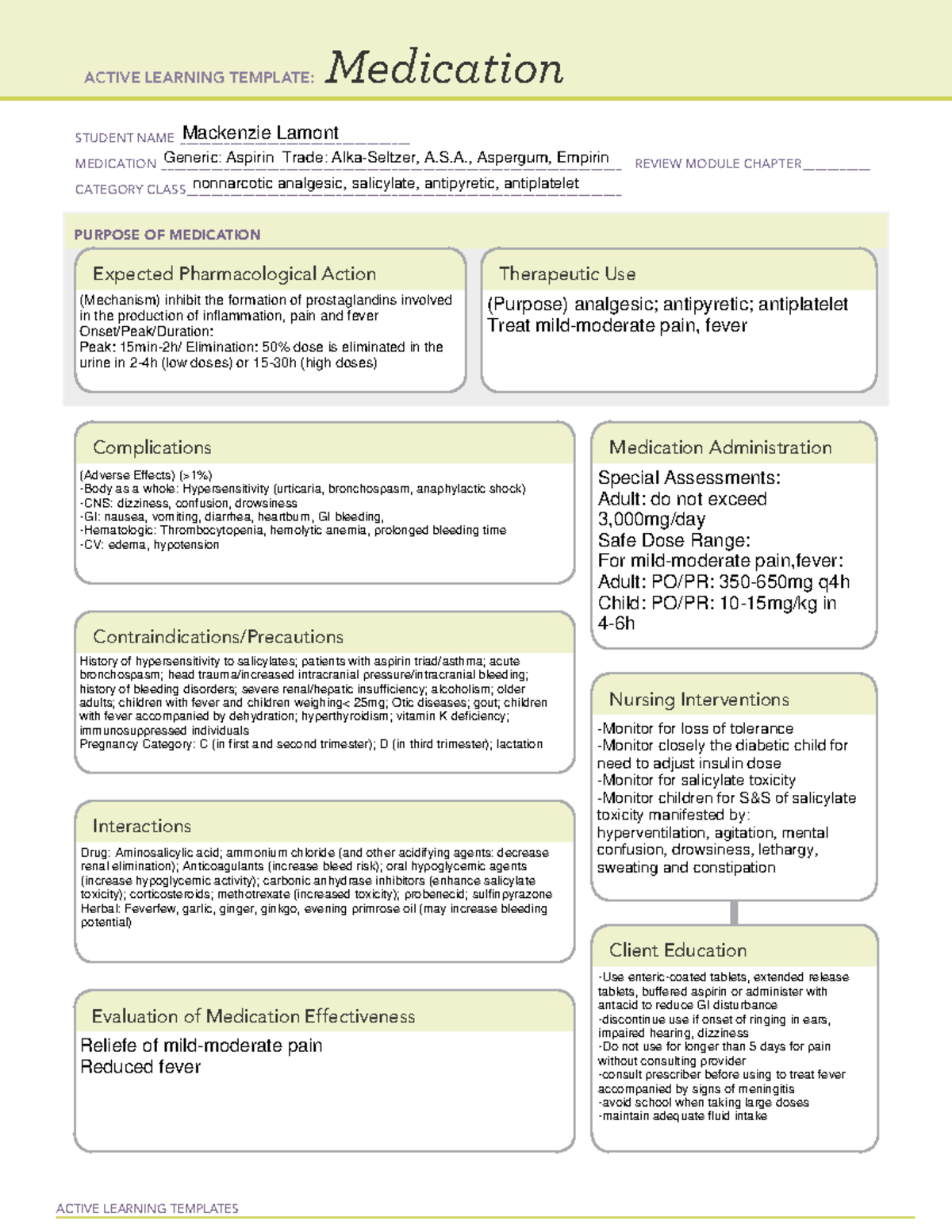
Aspirin & ASA Active Learning Template for Medication Review Studocu
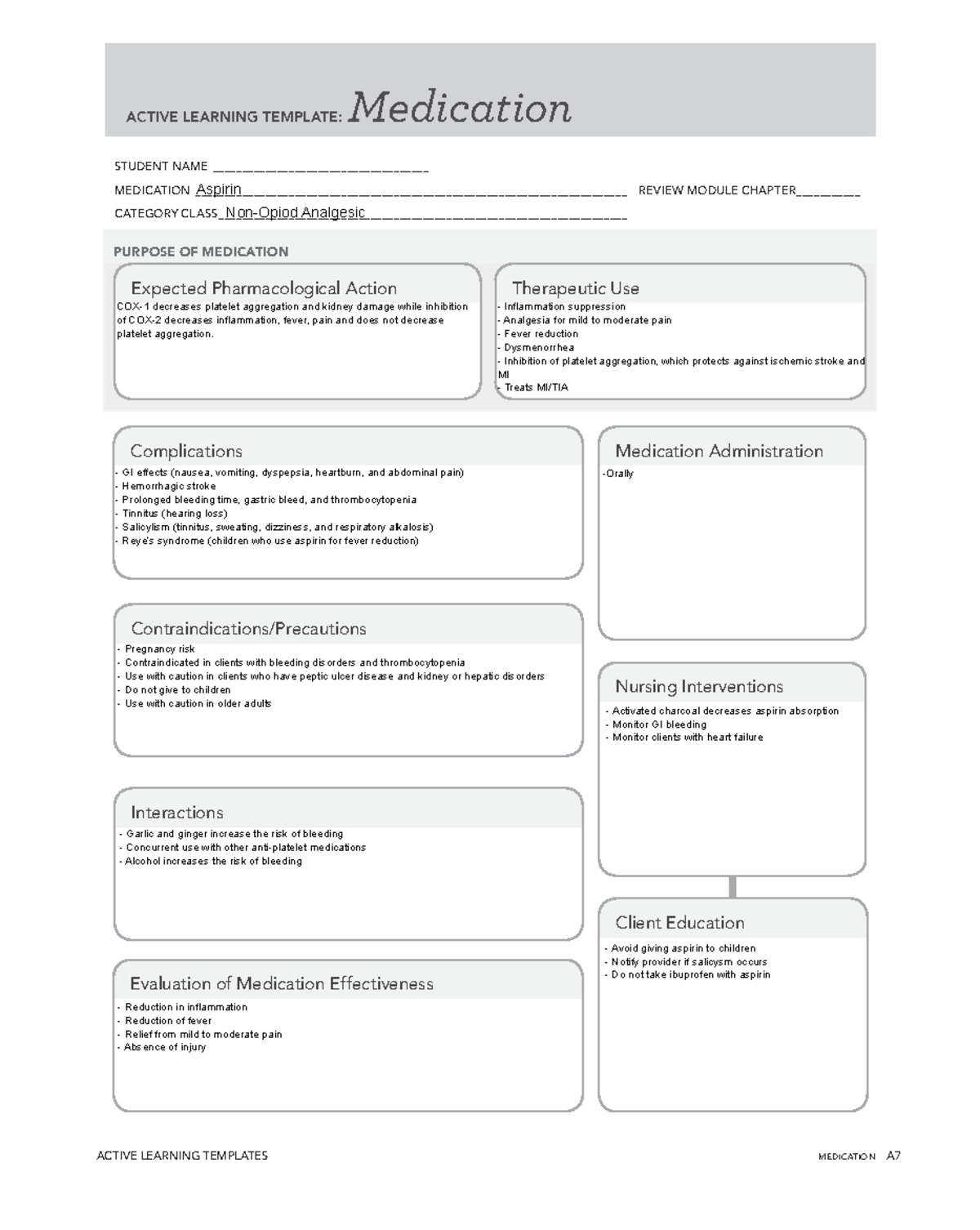
Aspirin Medication Overview Active Learning Template ATI Module Studocu
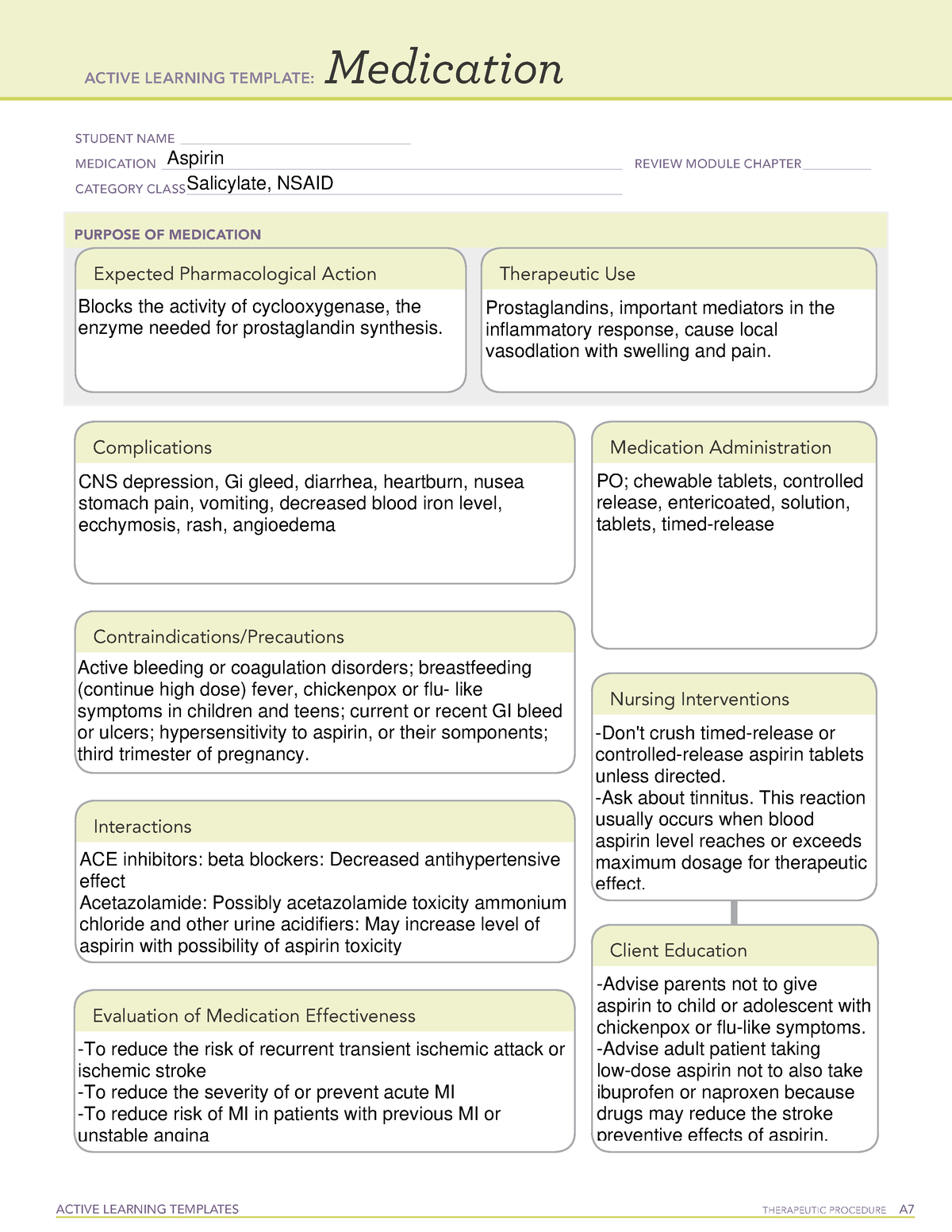
Aspirin Active Learning Template medication ACTIVE LEARNING TEMPLATES
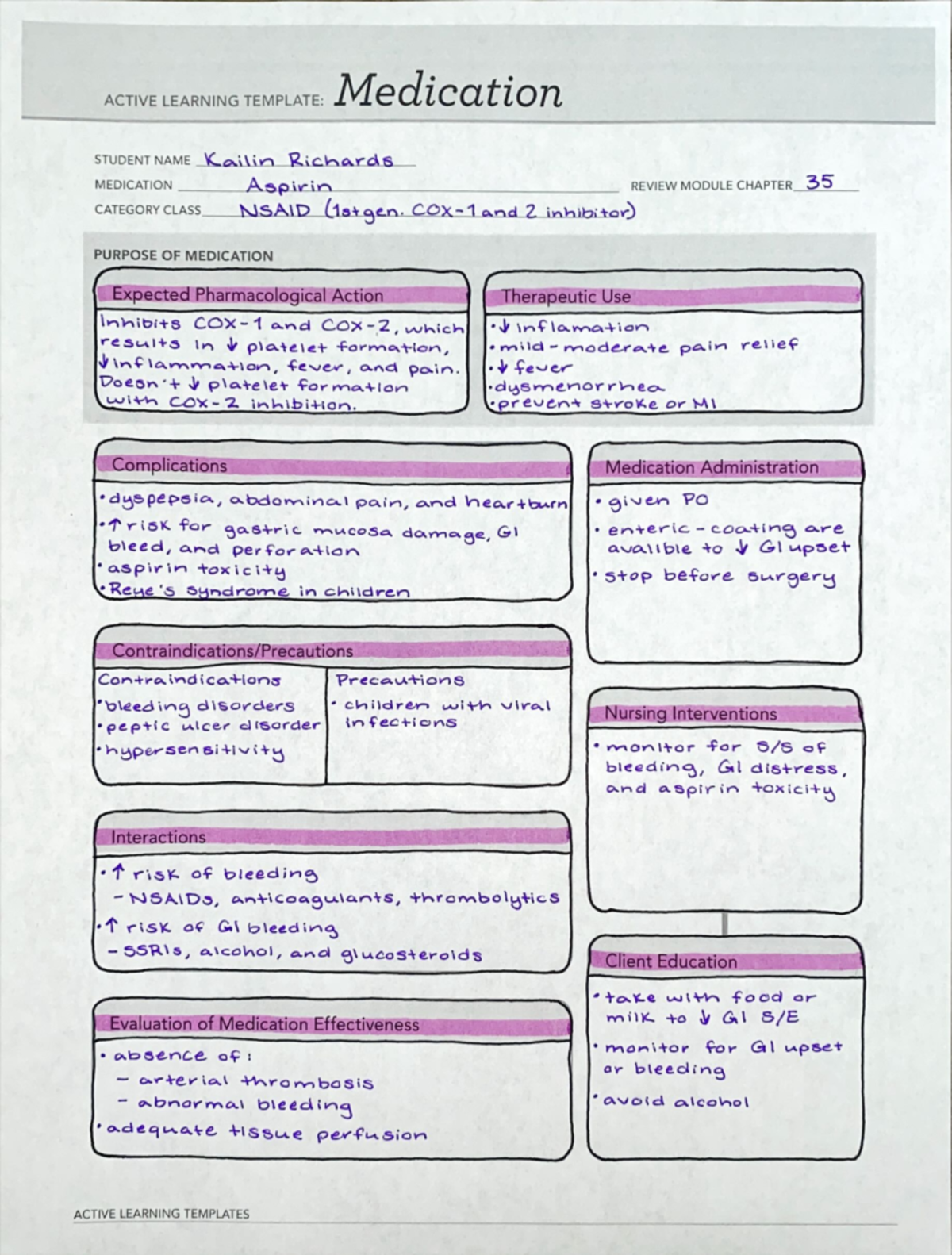
ATI Med Active Learning Template Aspirin Analysis and Uses Studocu
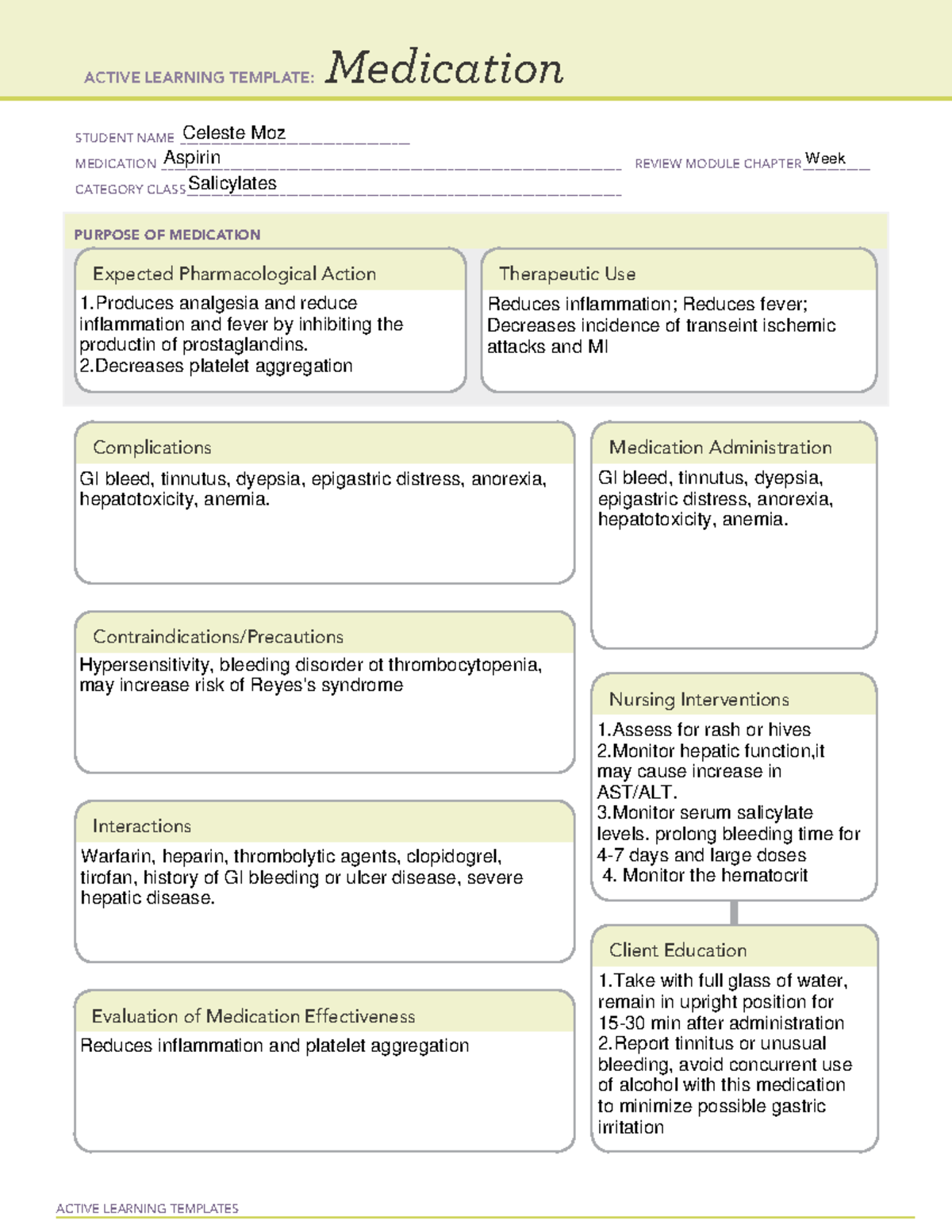
Medication template (2)Aspirin ACTIVE LEARNING TEMPLATES Medication
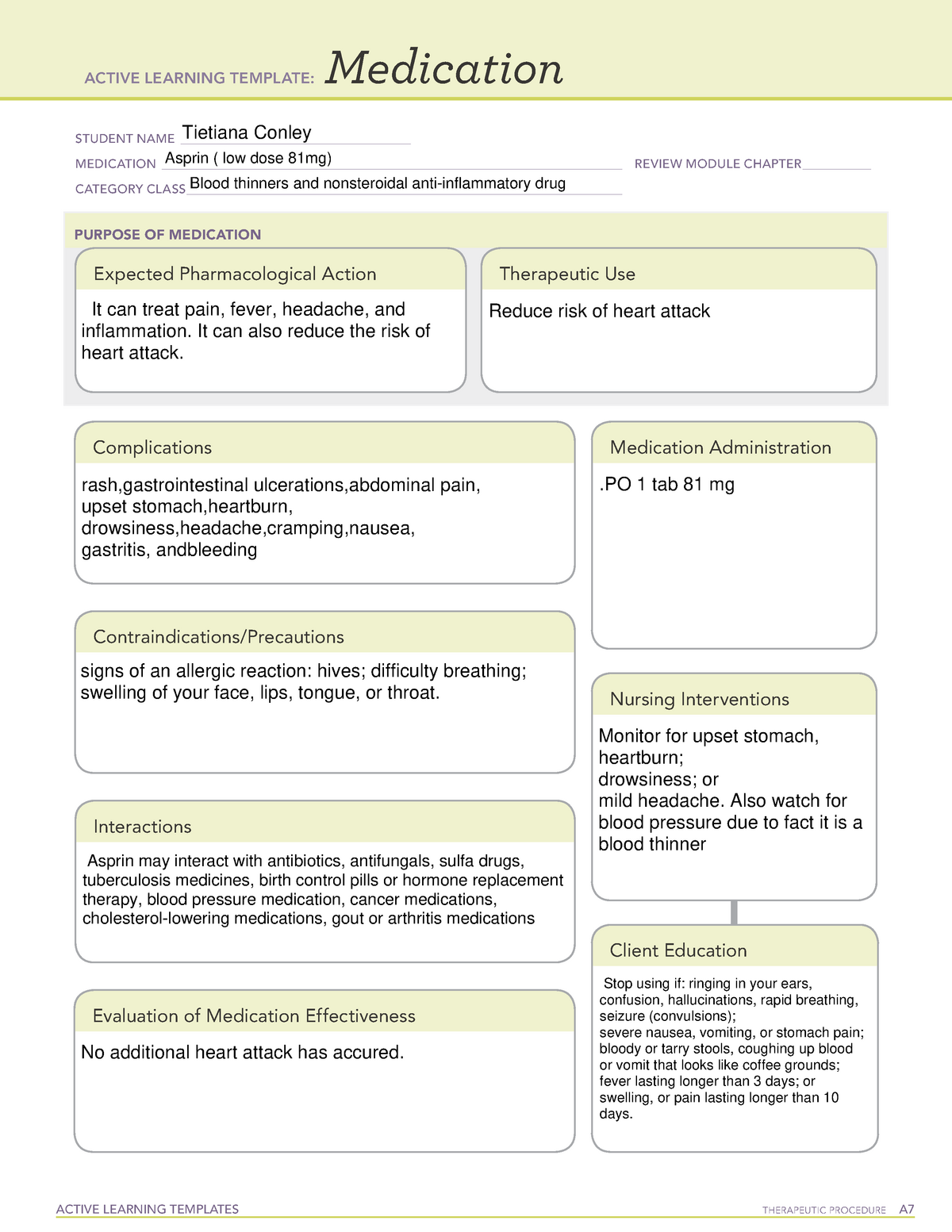
Aspirin Medication Template
Aspirin Is Used To Treat Inflammatory Conditions Including Kawasaki Disease, Pericarditis, And Rheumatic Fever.
Take Aspirin Once A Day To Lower The Risk Of A Heart Attack Or Stroke And Every 4 To 6.
People Can Buy Aspirin Over The Counter Without A Prescription.
Get The Facts Before Considering A Daily Aspirin.
Related Post: